
Caravana de cegos
- Manuel
Vega López,
1919
-
Abstract
| Facial expressions of emotion are nonverbal behaviors that allow us to interact
efficiently in social life and respond to events affecting our welfare. This
article reviews 21 studies, published between 1932 and 2015, examining the
production of facial expressions of emotion by blind people. It particularly
discusses the impact of visual experience on the development of this behavior
from birth to adulthood. After a discussion of three methodological
considerations, the review of studies reveals that blind subjects demonstrate
differing capacities for producing spontaneous expressions and voluntarily posed
expressions. Seventeen studies provided evidence that blind and sighted
spontaneously produce the same pattern of facial expressions, even if some
variations can be found, reflecting facial and body movements specific to
blindness or differences in intensity and control of emotions in some specific
contexts. This suggests that lack of visual experience seems to not have a major
impact when this behavior is generated spontaneously in real emotional contexts.
In contrast, eight studies examining voluntary expressions indicate that blind
individuals have difficulty posing emotional expressions. The opportunity for
prior visual observation seems to affect performance in this case. Finally, we
discuss three new directions for research to provide additional and strong
evidence for the debate regarding the innate or the culture-constant learning
character of the production of emotional facial expressions by blind
individuals: the link between perception and production of facial expressions,
the impact of display rules in the absence of vision, and the role of other
channels in expression of emotions in the context of blindness.
Introduction
From birth to adulthood, emotions, whether expressed or perceived as expressed
by others, remain essential common references for effective social interaction
(Matsumoto & Willingham, 2009; Sander & Scherer, 2009). While internal
subjective states may not be observed, they are often expressed or communicated
through a range of channels including nonverbal vocalizations (Sauter, Eisner,
Ekman, & Scott, 2010), posture (Aviezer & Todorov, 2012; de Gelder, 2006),
prosody (Adolphs, Damasio, & Tranel, 2002; Frick, 1985), chemosensory signals
(Mujica-Parodi et al. 2009), music (Sievers, Polansky, Casey, & Wheatley, 2013)
and language (Rimé, 2005), but are conveyed mainly through facial expressions
(Ekman, 1992, 1993).
The facial musculature is capable of over 40 independent actions, resulting in
an extremely large number of possible expressions. But of this large potential
repertoire, strong evidence now exists that a small number of specific facial
configurations are universally and discretely produced when emotions are
elicited (Ekman, 1993). Indeed, Ekman and his colleagues (Ekman, 1992; Ekman &
Friesen, 1971; Ekman, Friesen, & Ancoli, 1980; Ekman, Levenson, & Friesen, 1983;
Ekman & Oster, 1979) posited the existence of a limited number of basic, pure
emotions that are constrained by physiology, and provoke specific responses in
the facial musculature and autonomic system: joy, sadness, fear and anger,
possibly supplemented by disgust, surprise, interest or contempt (for a
discussion, see Gendron & Barrett, 2009).
One theoretical position suggests that universal expressions originate mainly
from an evolved emotion-response system and are a product of our evolutionary
history (Darwin, 1972). This position suggests that facial configurations are
genetically coded for all humans and are part of a larger response system
involving cognitive, physiological and phenomenological processes. According to
this view, this coordinated response system is produced from a biologically
resident source that requires little or no learning. In the 1960s, evidence of
this position was principally reinforced by cross-cultural studies in the
recognition of emotions performed by Ekman and colleagues. Across members of
different cultures, a high level of agreement was found in the interpretation of
facial expressions in photographs of basic emotions (Ekman, 1993; Ekman &
Friesen, 1971; Ekman & Oster, 1979). According to Ekman, the effect of learning
is minor and consists of modelling these innate expressions. The same
configurational pattern is present even if some inter-individual variations can
be found in compliance with socially shared expressive codes and display rules
reflecting, for instance, differences in intensity of the emotion in a specific
context and culture-specific prescriptions regarding who can show which
emotions, to whom and when (Ekman, 1993).
However, a second position suggests that universal expressions are produced by
culture-constant learning (Mead & Gordan, 1976). In this view, individuals
around the world learn, through observational learning, modeling and
reinforcement, to associate the same facial configurations with the same
emotional states or antecedent events. Facial expressions of emotion, thus, are
universal because the same expressions are observed and modeled around the world
in response to the same types of emotionally evocative situations. This view is
supported by the social and dynamic theories of emotion and its development
(Fogel et al. 1992). For the supporters of these theories, the role of learning
is central because emotional programming begins and is developed through visual
interaction between the baby and his entourage (for a discussion about theories
of emotional development, see Galati, Miceli, & Sini, 2001).
This article surveys 21 studies on the production of emotional facial
expressions by blind people from birth to adulthood. These studies are doubly
interesting from a theoretical point of view. First, they allow the test of some
opposing theories concerning the origin and development of the ability to
produce emotional facial expressions. Does this ability emerge only after a
visual experience during which infants learn to reproduce with their face the
emotional facial expressions perceived in their environment, or is it present at
the start of life and dependent on inherent structures of the systems involved?
Indeed, because blind individuals cannot, from birth or shortly thereafter, see
others’ expressions, they cannot learn to produce expressions by modeling. Thus,
if congenitally blind individuals express facial emotions in the same way as
sighted individuals, this would be compelling evidence that this behavior does
not involve visual learning.
Second, the surveyed studies might also answer the question of the role of other
non-visual processes, like vocalizations and tactile cues, in the context of
blindness, and whether these other perceptual sources play a role in the context
of blindness, not only in producing facial expressions but also in
discriminating the facial expressions of others. Henceforth, non-visual
explanations must be found to account for the existence of the same production
of emotional facial expressions in both populations, as different causes can
have the same effects. To discover these explanations, we need to know if the
factors that influence the production of the facial expressions by blind people
are identical to those affecting this behavior in sighted people.
In order to examine these questions, we searched for studies that met the
following inclusion criteria: (1) studies concerning the production of facial
expression of basic emotions by blind people of all ages, (2) scientific papers
published in an international journal, and (3) use of observational or
experimental approaches. A search of scientific databases (e.g., Google Scholar,
PsycArticles, PsycINFO, ScienceDirect) with the keywords “emotional + blind”,
“emotion + blind”, “facial expressions + blind”, “expressive + blind” yielded 20
articles that met all three of our inclusion criteria. Considering there were
very few studies available about the production of facial expressions by blind
subjects, we also included one article (Kunz, Faltermeier, & Lautenbacher, 2012)
analysing facial expressions of pain, even though this is not considered a basic
emotion according to the Ekman model (Ekman, 1993).
In particular, we identified and reviewed eight older studies with an
observational approach (Dumas, 1932; Eibl-Eibesfeldt, 1973; Fraiberg, 1975;
Freedman, 1964; Fulcher, 1942; Goodenough, 1932; Thompson, 1941; Webb, 1977) and
13 recent studies with an experimental approach (Chiesa, Galati, & Schmidt,
2015; Cole, Jenkins, & Shott, 1989; Galati et al. 2001; Galati, Scherer, &
Ricci-Bitti, 1997; Galati, Sini, Schmidt, & Tinti, 2003; Kunz et al. 2012;
Matsumoto & Willingham, 2009; Ortega, Iglesias, Fernandez, & Corraliza, 1983;
Peleg et al. 2006; Rinn, 1991; Roch-Levecq, 2006; Tracy & Matsumoto, 2008;
Tröster & Brambring, 1992).
After a discussion of three methodological considerations, this review of
studies reveals differing capacities in blind subjects to produce spontaneous or
voluntarily posed expressions of emotion. Results provided evidence that visual
experience is not necessary to spontaneously produce adequate facial expressions
for basic emotions such as happiness, anger and fear. In contrast, results from
studies in which subjects were invited to simulate an emotion in a laboratory
condition suggest that visual experience affects the production of voluntary
expressions and their control.
Methodological considerations
Three methodological considerations must be taken into account in the study of
the production of emotional facial expressions by blind people. The first
concerns the comparison of different populations with different visual
experiences: sighted subjects, late blind subjects and congenitally blind
subjects (Hatwell, Streri, & Gentaz, 2003; Heller & Gentaz, 2014). In fact, the
population of people who are blind is characterized by wide interpersonal
variability due to the type of visual pathology and age of diagnosis. There are
a small number of people who are completely blind since birth, and some have
pathologies entailing additional handicaps. This interpersonal variability
explains the well-known difficulty researchers confront in assembling an
acceptable sample of participants with the same profile of visual impairment.
Some of the oldest studies have investigated only small samples of participants,
sometimes only a single case. These difficulties in constituting equivalent
groups may account for some contradictory results found in the literature.
The second problem concerns the measures used to evaluate the adequacy of
emotional expression of blind participants and sighted individuals. In the
studies of several pioneers, analyses depended on only subjective
interpretations of the researchers or assistants (Eibl-Eibesfeldt, 1973;
Fraiberg, 1975; Freedman, 1964; Goodenough, 1932; Thompson, 1941) so it is
sometimes difficult to know exactly how these expressions occurred in the blind
subjects. To avoid this problem, some studies used visual judgment tasks, in
which the adequacy of facial expressions produced by blind individuals is
determined by the rate of recognition by naive sighted judges. But, as was
pointed out by some researchers (Galati et al. 2001; Galati, Scherer, &
Ricci-Bitti, 1997; Ortega et al. 1983), the results stemming from these judgment
tasks must also be interpreted with caution. Indeed, it is rather common that
the facial expressions of the blind participants are considered inadequate by
sighted judges, who may be misled by specific characteristic body and head
movements noted in blind individuals, such as eye pressing, body rocking, head
or eye rotations, and eyebrow raises. These stereotypic and repetitive behaviors
are known in the literature as “blindisms” (Brambring & Tröster, 1992; Chiesa et
al. 2015; Leonhardt, 1990). Some have a functional purpose and are used to
obtain information from the surroundings. (For instance, totally blind subjects
can make head movements to maximise auditory information; people with remaining
light perception can engage in repeated eye pressing to obtain perceptual
sensations.). Recently, Alfaro (2014) presented and discussed these behaviors
which some authors label, sometimes too quickly, “autistic-like”. In any case,
they do not have a communicative meaning or a connection with an emotional
state. Recently, Chiesa, Galati and Schmidt (2015) analyzed in more detail the
impact of these behaviors on interactions between visually impaired mothers and
their sighted children. Authors highlighted behaviors that can sometimes confuse
sighted interlocutors, for instance, lowering the brow while smiling (Chiesa et
al. 2015).
As we will see, several studies used videotapes in judgement tasks comparing
facial expressions of blind and sighted individuals (see Table 1 and Table 2 for
stimuli used in each study). In these studies, the eventual presence of atypical
movements of the body and head, at times contradictory with some expressions,
might partially explain some of the poor performance of subjects in these
judgment tasks. These movements can also be captured in photographs, producing
some atypical static facial features, such as raised eyebrows, open mouth,
closed eyes, or unfocused gaze. This question was pointed out by Galati et al.
(1997) in his emotion recognition study based on photographs of facial
expressions elicited in blind adults.
Table 1 - Studies of emotional facial expressions in blind
individuals—observational approach
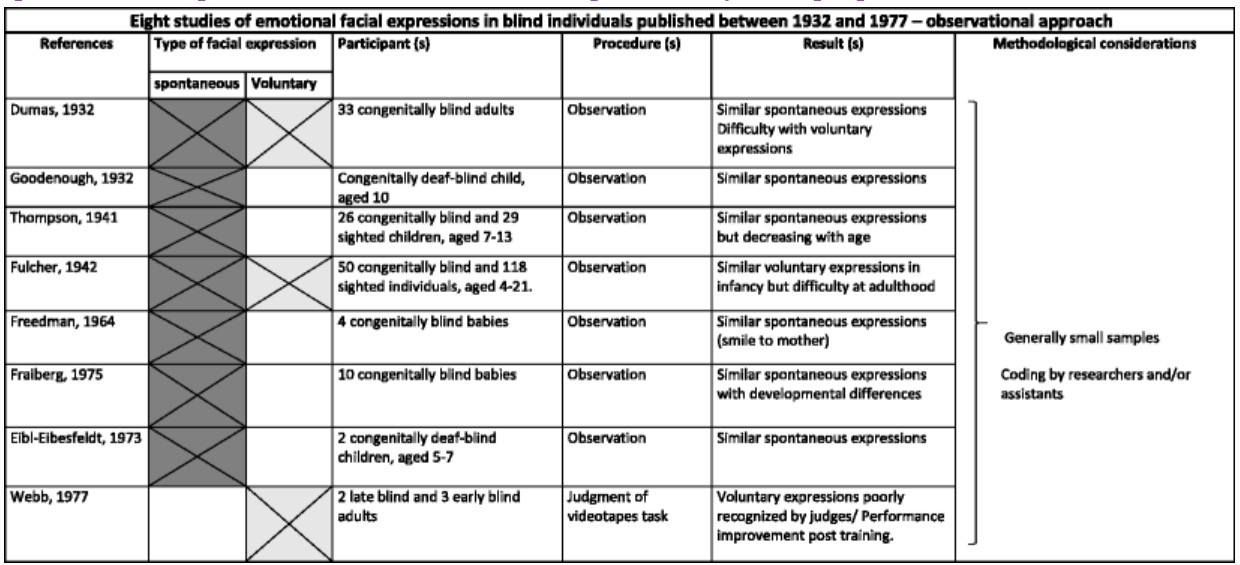
Table 2 - Studies of emotional facial expressions in blind
individuals—experimental approach

The first studies that used systems to obtain objective measures of facial
expression in blind and sighted adults were published in the 1980s. The FACS
(Facial Action Coding System) developed by Ekman and Friesen (1978) is a system
of anatomical analysis of facial action, in which each movement is deconstructed
into Action Units (AU, Fig. 1). All the principal studies conducted since the
1980s have used the FACS or another analogical system of measure like the
Maximally Discriminative Facial Movement Coding System (Max; Izard, 1979) to
obtain more objective data. Most of these studies used these measurement
techniques associated with judgment tasks or recognition tasks by sighted
decoders.
Fig. 1

Examples of Actions Units (AU) from Facial Action Coding System (FACS; Ekman &
Friesen, 1978)
(image from Kanade, Cohn and Tian databases: Kanade, Cohn, &
Tian, 2000)
The third problem concerns the ecological validity of the task. Galati, Scherer
and Ricci-Bitti (1997) highlight important methodological criteria the sighted
experimenter should take into account in protocols when using blind
participants. Of concern is the choice of scenarios to elicit an emotional
response in the specific context of blindness. According to Galati, Scherer and
Ricci-Bitti “to say that a person is able or unable to produce the expression of
a certain emotion in response to certain stimuli implies that the relationship
between that stimulus and that specific emotional response has in some way been
established” (Galati, Scherer, & Ricci-Bitti, 1997, p 1367). It is therefore
crucial to verify that daily life situations, based on a sighted context, are
also valid for blind people.
For instance, Galati and Cattaneo (1995) evaluated whether a sensory deficit, in
this case blindness, can affect the perception and evaluation of the antecedent
situation, and thus the reaction and emotion it triggers. They asked 19
congenitally blind, 21 visually impaired and 20 sighted adults to recall four
episodes in their daily life that caused them to experience an emotion (negative
or positive). For each episode, subjects were asked to define the type of
emotion felt, its duration and the situation that triggered it. On the whole,
sighted and the blind participants reported the same types of emotion (mainly
happiness, anger, sadness, and fear). However, differences were found related to
the antecedents of these emotions. In the case of fear, sighted subjects
reported an equal number of situations in which they themselves were in danger
and situations in which someone else was in danger, while blind persons reported
only first-person situations. As antecedents of disgust, sighted subjects
referred to perceptive contents—mainly visual stimuli—while blind subjects
mostly reported situations in which “others behaved in a reprehensible way”
(violation of social norms or moral values). They referred to scenarios in which
another person did not take into account their disability or refused to provide
assistance. A strong link with their disability was also revealed in the
antecedents of surprise. In this category, sighted subjects referred to
unexpected external events (a visit or news) while blind subjects tended to link
surprise emotions with situations in which they accomplished things they did not
believe that they would be able to do.
A review of studies of the production of facial expression in blind individuals
must take into account these three methodological considerations that may
explain some contradictory results. For this reason, we will return frequently
to these considerations which are also highlighted in recapitulative tables
summarizing the old and recent studies reviewed in this article (Table 1 and
Table 2).
The spontaneous production of facial expressions of emotion from birth to
adulthood is independent of visual experience
From the 4th week of life, blind babies smile in response to the sound of their
mother's or father's voices (Fraiberg, 1971, 1975, 1977; Freedman, 1964). The
smile of blind infants has apparent similarities with the smile of sighted
infants, but some differences can be detected concerning its development. At 6
months of age, when the smile of a sighted child becomes relatively automatic in
response to the gestalt of familiar human faces, in blind children it is still
an irregular smile elicited only by the voice of the mother, or tactile and
kinaesthetic stimulation such as tickles and games, for example, bouncing the
child on the knee (Fraiberg, 1971, 1975, 1977).
Moreover, authors suggested that despite some similarities, the facial
expressive repertoire of blind children is globally limited in comparison to
that of sighted children. Between the two opposite emotional states of happiness
and anger, there are a wide range of facial expressions marking affect,
attention and interest that are differentiated through vision. In a program of
intervention in infancy for blind children, Fraiberg (1971) noted different
kinds of expressions that are reinforced through visual experience, such as “the
expressive look of longing, or the expression that we call ‘quizzical’ or the
expression that we call ‘coy’” (Fraiberg, 1971, p. 387).
The absence of these typical signals can be misinterpreted by sighted persons
around the child as a lack of interest and affect, sometimes making first
parent–child communications difficult. On the other hand, a mother who learns
that her baby is blind may also be confronted with psychological pain and this
can also be a handicap in the development of the first links of communication.
To assist parents who may sometimes be confused by the absence of some typical
visual signals, Fraiberg (1975) analyzed very extensively the interactions
between blind babies and their surroundings. She showed how their affective
behaviors could be very rich if observers will transfer their attention from the
face to the child’s body and hands, taking note of the child’s very active
manual explorations of familiar faces and objects.
Additional observations were conducted with young blind and deaf-blind children
(Eibl-Eibesfeldt, 1973; Goodenough, 1932; Thompson, 1941). Eibl-Eibesfeldt
(1973) observed a 5-year-old boy and 7-year-old girl, both born deaf-blind. The
same spontaneous expressive behavior was observed, particularly for the
expression of happiness. For Eibl-Eibesfeldt, the fact that children with
multiple handicaps present the same expressions when they are limited in terms
of surrounding visual stimuli, is evidence of the innate nature of this
behavior. As we will see, this hypothesis of the universal character of emotions
is reinforced by more recent observations of facial expressions elicited
spontaneously in blind adults (Matsumoto & Willingham, 2009; Peleg et al. 2006;
Tracy & Matsumoto, 2008).
We must note that the majority of the first studies were conducted with a small
sample of participants, sometimes only a single case. In children, one of the
oldest studies with a representative sample was led by Thompson (1941). By
observational and photographic methods, Thompson analyzed facial expressions of
happiness, laughing, anger or fear, produced by a group of 26 blind and 29
sighted children, ranging from 7 weeks to 13 years of age. Results showed that
even though, in the 1st year of life, blind and sighted children produced very
similar facial expressions, a decrease in facial activity was observed in blind
children at 2–3 years of age, particularly for smiling and laughing. According
to Thompson, neuromuscular patterns of response corresponding to facial
expressions appear without the opportunity for visual learning, but social
mimicry is apparently responsible for the maintenance of a constant amount of
facial activity.
More recently, Tröster and Brambring (1992) used scales of social-development
included in the Bielefeld Developmental Test to compare the level of
social-emotional development of 22 congenitally blind children and 47 sighted
children, aged 9–12 months. Researchers compared the occurrence of different
social-emotional behaviors, such as emotions, interactions with the mother,
compliance with request, ability to express own needs, etc. Particularly in the
area of emotional expressiveness, authors observed that, even if blind children
display similar expressions of happiness and anger, their repertoire of
expressive reactions is restricted when compared to that of sighted children.
These results are in accordance with Fraiberg’s previous observations (1971,
1975, 1977). Blind children seem to not respond to social stimuli with the same
regularity and level of discrimination as their sighted peers. Also, according
to mothers of 9-month-old blind children, intensive tactile stimulation often
appears to be necessary to elicit pleasure reactions. Differences could also be
observed in the child’s reaction to separation from the mother. Compared to
sighted children, who frequently protest or cry when the mother leaves the room,
these reactions were reported in only 6 of 22 blind children.
More recently, Galati et al. (2001) analyzed spontaneous facial expressions of
anger, joy, disgust, surprise, interest, sadness and fear produced by ten
sighted children and ten blind children between 6 months and 4 years of age.
Blind and sighted children were filmed at nursery school during the course of
seven situations selected by researchers and in collaboration with children’s
caregivers, who acted in order to generate facial expressions of anger, joy,
disgust, surprise, interest, sadness and fear (for instance: “interruption of a
behavioral plan”—giving and then removing a biscuit to generate anger; or
“contact with a repulsive stimulus”—tasting some drops of lemon juice to
generate disgust (Galati et al. 2001, p. 270). A “plurimodal situation” taking
into account sensory modalities available in each group of children was also
created. Children were surrounded by objects to touch and also objects which
produce sounds. Videotapes of facial expressions produced were measured
according to a facial muscles measurement system (Max; the Maximally
Discriminative Facial Movement Coding System designed by Izard, 1979) associated
with a judgment task. Important similarities were found between spontaneous
facial expressions elicited in sighted and blind. However, in contrast to
results obtained by Thompson in the 1940s, Galati, et al. (2001) did not find a
decrease with age in the facial expressiveness of blind chil-dren. In judgment
tasks, decoders globally attributed the same correct emotional label to facial
expressions produced by both groups of subjects. Few differences were found,
with the ex-ception of sadness and fear, which were systematically con-fused
with one another in expressions elicited in blind chil-dren. Interpretations of
these emotions have been more diffi-cult because they appear later in emotional
development (between 6 and 12 months of age for sighted), and this delay is
probably even greater in children who are blind (Galati et al. 2001). An
additional interesting explanation for this confusion may be “a sadness
sensation felt by judges themselves in recognizing the faces of the blind
children” (Galati et al. 2001, p. 275). This tendency to attribute sadness to
blind children’s expressions could have influenced judges in applying this label
for other expressions.
In adults, Peleg et al. (2006) examined the facial configurations of 21
congenitally blind individuals and their sighted family members or sighted
strangers (31 sighted participants in total). Using two types of analysis
(documentary and computational), results revealed correlations between the
facial configurations of congenitally blind (who have not touched their
relatives' faces, during any stage of their life, in order to adopt facial
expressions) and sighted people. Moreover, results revealed more correlations
between the facial configurations when individuals belonged to the same family,
particularly for think-concentrate, sadness, and angry facial expressions (Fig.
2). These data provided evidence for a “unique family facial expression
signature” and evidence for a hereditary basis for facial expression (Peleg et
al. 2006).
Fig. 2

Similar movements in born-blind participants (Left) and their sighted relatives
(Right) documented by Peleg et al. (2006).
Copyright (2006) National Academy of
Sciences U.S.A.
Tracy and Matsumoto (2008) tested whether sighted, blind and congenitally blind
individuals across cultures spontaneously display pride and shame behaviors in
response to the same success and failure situations—victory and defeat at the
Olympic or Paralympics Games. Results showed that sighted, blind, and
congenitally blind individuals from 37 nations displayed the behaviors
associated with a prototypical expression of pride in response to success.
Sighted, blind and congenitally blind individuals from most cultures also
displayed behaviors associated with shame in response to failure.
In another study, Matsumoto and Willingham (2009) examined facial expressions
posed spontaneously by congenitally and late blind judo athletes in the Athens
Paralympics Games, comparing them with expressions posed by sighted athletes in
the same game context. Facial expressions of blind athletes from 23 cultures
were photographed during three different evocative emotional situations in the
championship: at the end of the match and at two moments during the medal
ceremonies (Fig. 3). These situations involve different emotional responses
considering their social nature. For example, expressions of sadness or disgust
can be expected in athletes who lost at the end of the gold medal match. These
same athletes (silver medalists) will nonetheless probably display non-Duchene
smiles (a social smile) when receiving the silver medal. Photographs were coded
with FACS, and the results of this ecologic and very pragmatic study revealed
that blind athletes produced the same facial configuration to show emotion as
did sighted athletes. There were also no significant differences found between
congenitally and late blind groups. The only differences found were related to
head movements in blind individuals, which according to the authors were
associated with an attempt to maximize audio stimuli, and other typical
behaviors like eye rotations or eyebrow raises. As mentioned earlier, these can
produce some uncommon static features in photographs signaling differences of
facial musculatures in FACS coding.
Fig. 3

Comparison of facial expressions produced by blind and sighted athletes
(Matsumoto & Willingham, 2009).
Reprinted with permission from Bob Willingham.
The fact that blind athletes used smiles and facial control in social situations
in this study in the same ways that sighted athletes did suggests that
observation is not necessary for individuals to learn how to regulate their
expressions. Some studies observed whether this ability to spontaneously mask an
emotion also occurs in infancy. In a study from Cole, Jenkins and Shoot (1989),
12 congenitally blind children and 12 sighted children, aged 6–13 years, were
instructed to choose their preferred toy from a list. Experimenters examined
videotapes of the expressions posed by children who received toys they did not
want as well as their verbalizations about expressive control over their
disappointment. To examine verbalizations, the child was interviewed about his
feeling (“How did you feel when you got that prize?”) and about the knowledge of
another person, present during the situation, concerning the child’s feeling
(“Did she know how you felt?”, “How did she know or not know your feelings?”).
Results showed that blind and sighted children have the same capacities to mask
a negative emotion with a false smile that has been observed in adults
(Matsumoto & Willingham, 2009), but blind children were less likely to refer
spontaneously to control their facial expression. Seven (58.3%) of the sighted
children referred to facial control; in contrast, one (8.3%) blind child made
this reference. Blind children referred to verbal control of their
disappointment (e.g., “I didn't tell her”) rather than facial expressive
control.
In the same manner, Galati et al. (2003) compared spontaneous emotional facial
expressions of blind and sighted children between 8 and 10 years of age to
verify their capacity to modulate and control facial behaviors in complex
emotional situations. Children were filmed in their classroom in the midst of
seven situations eliciting emotions. These situations were the same as those
selected in the study presented earlier involving younger children (Galati et
al. 2001) with only some adaptations with respect to age (for example,
“interruption of a behavioral plan” the situation of removing a biscuit, was
replaced by the interruption of a game). Facial expressions were coded using
FACS. Results showed that despite the fact facial expressions of blind and
sighted children were very similar, some differences emerged. Firstly, and in
general, the total frequency of activated AUs was higher for blind than for
sighted children (314 for the blind, 253 for the sighted). Secondly, sighted
children masked negative emotions more frequently than blind children. The
activation of the dimpler (AU14/mouth corners, see Fig. 1), is a socially shared
code used to control and/or mask anger in facial expression (Ekman & Friesen,
1978) and is more frequently observed in sighted children than in blind
children. Finally, FACS coding showed some specific AUs that prevail in blind
children’s faces, such as head movements, eye closure and mouth opening
associated with “blindisms”. According to the authors, these results suggest
that even though similarities were found between expressions produced by blind
and sighted children, blind children conform less to the display rules that
determine in which situations, which emotions should be expressed or masked and
the degree of control exercised over their intensity.
In summary, old and recent studies revealed that blind and sighted people
spontaneously produce the same type of facial expression, particularly for basic
emotions like happiness, sadness and fear. Furthermore, some differences were
found concerning the occurrence of these expressions in infancy. Concerning the
capacity of blind subjects to conform to display rules, such as masking a
negative emotion with a positive one, a study of adults did not find differences
associated with visual experience (Matsumoto & Willingham, 2009). This capacity
was also observed in blind children, even though they mask negative emotions
less frequently than sighted children (Galati et al. 2003), and verbalize less
about this expressive control (Cole et al. 1989).
However, as we will see in the next section, whereas visual experience seems
unnecessary to spontaneously produce adequate facial expressions, it does seem
to affect the production of voluntary expressions.
The voluntary production of emotional facial expressions are affected by visual
experience
In a study comparing spontaneous and voluntary expressions produced by blind
individuals, Dumas (1932) suggested that expressions elicited by a real
emotional sensation appear to be associated with innate cognitive programs while
voluntary expressions are connected with prior visual observation. Dumas’ ideas
are then reinforced by Fulcher (1942) in a study of 50 congenitally blind and
118 sighted individuals, males and females, aged 4–21 years. In terms of a
developmental view, results showed that the voluntary expressions of blind
infants are less pronounced but are still similar to those of sighted but become
inadequate at adulthood. Even if blind and sighted subjects use the same facial
movements to reproduce emotions, in the first group these movements are less
clear and their muscles less pronounced. Webb (1977) obtained similar results in
a study aiming to train blind individuals to execute facial expressions. Before
training, voluntary expressions produced by subjects received poor rates of
recognition by judges. Data revealed a performance improvement following
training with a device that allowed participants to have audio feedback while
they produced facial movements and made efforts to control them.
In research comparing voluntary and spontaneous expressions generated by seven
congenitally blind children and seven sighted children, aged 6–13 years, Ortega,
et al. (1983) showed that blind and sighted spontaneously produce the same
action units for the smile. The action unit 12 (lip corner puller, see Fig. 1)
was present in 97% of photographs of smiles produced by blind participants and
in 96.2% of those produced by sighted participants. The AU 6 was also present
but less frequently (46.7% for blind and 79.5% for sighted).
Concerning voluntary expressions, Ortega et al. (1983) asked another group of 15
blind and sighted subjects to produce six facial expressions (surprise,
happiness, sadness, anger, fear and disgust). The photographs were evaluated by
44 judges and also measured with FACS. The highest percentage of recognition by
judges of expressions produced by blind participants was about 40% (46% for
sadness and 40% for happiness). Expressions of surprise and fear obtained very
low rates of recognition (11% and 15%, respectively). In expressions produced by
sighted, percentages of recognition were globally higher (82% for disgust, 68%
for happiness, 38% for fear). Moreover, measures from FACS revealed that facial
muscles of sighted matched more clearly with the expected prototypical patterns
of basic emotions postulated by Ekman and Friesen (1978) for the expressions of
surprise, happiness, anger, fear, and disgust.
Results obtained by Ortega and collaborators seem to confirm a dichotomy between
spontaneous and voluntary expressions as revealed in previous studies. However,
according to the authors, these results should be interpreted with caution. They
noted that the differences between blind and sighted individuals are
quantitative and not qualitative. Some expressions produced by blind
participants, like happiness and sadness, are better recognized by judges than
others, and, particularly for sadness, the percentage of recognition is almost
identical to the percentage rate for sighted participants. As in Galati et al.
(2001), a common denominator of “unhappiness” associated by judges with the
facial expressions of blind individuals can explain these results.
In a study examining the production of voluntary basic emotions by 20 blind and
20 sighted children, aged 4–12 years, Roch-Levecq (2006) observed that, even
though blind children were just as able as sighted children to understand the
underlying cause-effect relationships that evoke basic emotions, their
expressions did not convey these basic emotions to others as well as those of
sighted children. Indeed, sighted children were more able to convey fear and
happiness than the blind children, and results suggested that it was
significantly more difficult for the adult raters to discriminate the blind
children's facial expressions, even to differentiate between positive and
negative emotions, compared with the facial expressions of sighted children.
However, as noted in the methodological considerations, Roch-Levecq used a
visual judgment task and results stemming from these tasks must be interpreted
with caution.
In adults, Rinn (1991) videotaped facial expressions posed by 20 congenitally
blind and 20 sighted subjects at the request of the experimenter (voluntary
condition) and in a structured interview consisting of asking participants to
interpret 20 old sayings (spontaneous condition). The videotapes were analyzed
with FACS. Results showed that the facial expressions of congenitally blind are
of generally poor quality when they voluntarily pose facial expressions, whereas
their expressions produced during the interview presented facial movements
similar to sighted participants (particularly smiles and eyebrows). To explain
these results, Rinn proposed a hypothesis of two distinct areas of the brain. He
suggested that spontaneous expressions depended on innate processes originating
from the subcortical areas while voluntary facial expressions were connected
with control-specific processes emanating from the cortical motor strip. This
voluntary control seems to depend on visual feedback regarding the position of
facial landmarks. This neuropsychological approach was also assumed in a recent
review (Hwang & Matsumoto, 2016).
Still in adults, Galati, Scherer and Ricci-Bitti (1997) compared the ability of
14 congenitally blind and 14 sighted adults aged 20–70 years to voluntarily
produce facial expressions related to a number of emotions using both objective
facial measurement and observer recognition. Scenarios to elicit an emotional
response in the specific context of blindness were chosen based on data obtained
in previous studies we mentioned above (Galati & Cattaneo, 1995). However, it is
unfortunate that the list of scenarios selected from these previous works is not
presented in the study. Given this, it is difficult to evaluate if the ecologic
validity of the stimuli has been effectively implemented and its impact on
performances. FACS measurements revealed less difference than one might have
expected on the basis of previous studies between blind and sighted persons in
voluntary facial expression. However, as in previous studies, expressions of
blind individuals were poorly recognized by judges. Once again, a judgment
problem cannot be excluded. According to Galati, Scherer and Ricci-Bitti,
sighted judges may have been confused by unusual habitual expressions of many of
the blind individuals, that is, the same differences founded by Matsumoto and
Willingham (2009) in their analysis of spontaneous facial expressions of blind
individuals.
The effect of “blindisms” on the expressiveness of blind persons was further
detailed in a recent study examining spontaneous play interactions between seven
visually impaired mothers and their sighted children, aged between 6 months and
3 years (Chiesa et al. 2015). The interaction was filmed with two cameras, one
for each partner’s face and upper body. Using a control group of sighted mothers
and their sighted children, four modalities of communication were compared:
voices, facial expressions, physical contacts and gaze. Analysis of facial
expressions using the FACS showed differences between sighted and visually
impaired mothers only with respect to forehead movements. Mothers with visual
impairments produced very irregular movements of eyebrow raises and frowns, much
less or much more often than sighted mothers. Another quantitative analysis
described in more detail the meaning of eyebrow movements produced by a
congenitally blind mother compared with a sighted mother. Based on categories of
facial events suggested by Ekman and Friesen (1978), results showed that 61 of
72 of the eyebrow movements of the blind mother were mostly stereotypical
repetitive movements not linked with emotional or communicational meaning.
In another study comparing evoked and voluntary facial expressions of pain
produced by 21 blind and 42 sighted adults, Kunz and colleagues (2012)
highlighted the impact of display rules on the expressiveness of blind persons.
In the first experimental condition, subjects received thermal stimulations in
three intensities: close-to-painful, slightly painful or moderately painful
(Fig. 4). The term “evoked expressions” is preferred to “spontaneous
expressions”, in this case to evoke a condition in which a real emotion is
elicited through stimulation in a laboratory. In the second condition, aimed at
analyzing voluntary expressions, subjects were asked to reproduce the facial
expression elicited in part 1 of the study (2a, reproduction), and to
voluntarily express as optimally as possible what they had been feeling during
part 1 of the study (2b, optimal condition).
Fig. 4

Examples of evoked (part 1) and voluntary facial expressions (part 2a:
reproduction, part 2b: optimal condition)
produced by a blind and a sighted
subject (image from Kunz et al. 2012). Copyright (2012), with permission from
Elsevier
Results showed that, in an evoked condition, congenitally blind and sighted
individuals displayed the same pattern of facial movements in response to
painful stimulation, but blind subjects were facially more expressive compared
to sighted. In contrast, they showed rather reduced voluntary facial
expressions. Blind individuals were not able to voluntarily increase their
facial expression when asked to pose an “optimal expression” as sighted will do.
Interesting explanations related to display rules for the expression of pain in
the culture were provided. Differences in intensity that were found seem to be
related to the capacity to simulate and control these behaviors in infancy.
Children are, in general, discouraged from expressing emotions with great
intensity, and they also learn to mask pained expressions to avoid embarrassment
in front of peers. In contrast, they also learn to voluntarily exaggerate their
facial expression of pain in some situations. This capacity to regulate the
intensity of painful facial expressions, raising or lowering the level of
expression, seems to be linked with visual—and social—feedbacks.
In summary, studies about voluntary production revealed that blind individuals
have difficulty posing emotional expressions. However, according to some
authors, these results must be interpreted with caution. Difficulty in posing
emotional expressions seem apparent for some facial expressions and not others
(Ortega et al. 1983). The lack of ecologic validity of the stimuli (Galati,
Scherer, & Ricci-Bitti, 1997) and the influence of facial behaviors specific to
blindness, known as “blindisms”, in the interpretation of facial expressiveness
may partially explain the poor performances of blind subjects (Chiesa et al.
2015; Galati, Scherer, & Ricci-Bitti, 1997; Matsumoto & Willingham, 2009; Ortega
et al. 1983).
General discussion and perspectives
This paper reviews twenty-one older as well as recent studies that have examined
the production of facial expressions by blind individuals. Of these, fifteen
reported that blind subjects spontaneously produced the same types of emotional
expressions as sighted individuals, particularly for basic emotions like
happiness, sadness and fear (Chiesa et al. 2015; Cole et al. 1989; Dumas, 1932;
Eibl-Eibesfeldt, 1973; Fraiberg, 1975, 1977; Freedman, 1964; Galati et al. 2001;
Galati et al. 2003; Goodenough, 1932; Matsumoto & Willingham, 2009; Ortega et
al. 1983; Peleg et al. 2006; Thompson, 1941; Tracy & Matsumoto, 2008; Tröster &
Brambring, 1992). This similarity in expressiveness is also evidenced in a more
recent study on facial expressions of pain (Kunz et al. 2012). In infancy and
childhood, however, some differences were found concerning the occurrence of
these expressions. The repertoires of expressive reactions are more restricted
in blind children in comparison with sighted children (Fraiberg, 1975, 1977;
Tröster & Brambring, 1992). A decrease in facial activity in blind children
detected in early observations (Thompson, 1941) was not confirmed in more recent
work (Galati, Miceli, & Sini, 2001).
Among these twenty-one studies, eight examined voluntary expressions and
indicated that blind individuals have difficulty posing emotional expressions
and controlling their intensity (Dumas, 1932; Fulcher, 1942; Galati, Scherer, &
Ricci-Bitti, 1997; Kunz et al. 2012; Ortega et al. 1983; Rinn, 1991;
Roch-Levecq, 2006; Webb, 1977). However, this difficulty is apparent for some
facial expressions and not others. Attention paid to ecologic validity of the
stimuli seems also to have influenced the performances. Moreover, some problems
regarding judgment of the expressions of blind individuals by sighted decoders
were also advanced by some researchers (Galati, Miceli, & Sini, 2001; Ortega et
al. 1983). Actually, sighted judges could be confused by the occurrence of
“blindisms” reflecting unusual and habitual facial movements of many blind
individuals and/or be influenced by a feeling of “unhappiness,” experienced by
the judges themselves, as they viewed the expressions of blind individuals.
Differences noted between facial expressions produced by blind and sighted
individuals, based on these subjective judgments, were not confirmed by more
objective systems of measurements of facial configurations (Galati, Scherer, &
Ricci-Bitti, 1997; Matsumoto & Willingham, 2009).
Globally, at least with respect to facial patterns elicited by blind persons in
real emotional contexts, the studies reviewed provide compelling evidence for a
non-visually learned and universal source for facial expressions. However, we
think that three questions should be explored in future research to reinforce
this point of view. The first question concerns the link between production and
recognition of facial expressions in blind individuals. In light of the grounded
cognition approach, it could be interesting to examine whether the production of
expressions can have an impact on their ability to discriminate facial
expressions by touch. Regarding the link between perception and production, we
can ask if other sensory channels and modalities of learning, such as touch and
hearing, might explain the production of adequate facial expressions in the
absence of vision. The second question concerns the role of display rules in
this context. Some researchers showed that even if blind subjects produce the
same facial patterns as sighted ones, visual feedback could still be important
in shaping this innate expressions. Finally, we also discuss the role of other
channels to express emotions in the absence of visual signs.
The link between production and recognition of emotions by other sensorial
channels
Studies reviewed offer compelling evidence that visual learning seems to not be
necessary in order to produce the same pattern of facial expressions in real
emotional contexts. However, results did not answer the question of whether the
processes implemented in blind people are the same as those implemented in
sighted people. Particularly, one may wonder if other nonvisual processes,
including vocalizations and tactile cues, might play a role in the context of
blindness, not only in producing but also in discriminating the facial
expressions of others.
The link between production and perception is already well established in the
studies on emotional expression in sighted (for a review, see Niedenthal, 2007).
This link is particularly highlighted in studies about facial mimicry of smiles
(Korb et al. 2015; Niedenthal, Mermillod, Maringer, & Hess, 2010). When we
observe a facial expression, we often recreate the motor production of the
perceived facial expression in our own faces. In light of the grounded cognition
approach (Barsalou, 2010), the hypothesis advanced is that the experience of
performing facial expressions contributes to the perceptual process and the
meaning assigned to the expressions perceived. A recent study also evaluated
top-down social influences on the embodied processing of facial expressions.
Results showed that facial mimicry is reduced in the absence of social utility
(Beffara et al. 2012).
It would, therefore, be interesting to know if this link between production and
perception can also take place in the context of blindness through other sensory
channels, such as touch or hearing and the role of top-down and bottom-up
processes in this context. Does the ability to produce adequate facial
expressions have an impact on the ability of blind individuals to discriminate
expressive faces by touching the other’s face or by hearing emotional tones of
voice? Or, examining the question in another sense, does the opportunity to
perceive facial expressions through other sensorial channels have some impact on
the ability of blind individuals to produce correct emotional feedback?
Actually, only a few studies have been conducted to explore the discrimination
of emotional faces by touch and the question remains open. For example, studies
examining the capacity of touch to discriminate expressive faces (Kilgour &
Lederman, 2002; Lederman et al. 2007; Lederman et al. 2008; Picard, Jouffrais, &
Lebaz, 2011) provided evidence that touch performs better than would be expected
as a means of discriminating facial expressions as displayed in real faces,
tactile facemasks (Kilgour & Lederman, 2002; Lederman et al. 2007) and even in
tactile drawings of facial expressions (Lederman et al. 2008; Picard et al.
2011). It is important to note that the main focus of studies concerning
discrimination of faces by touch has been to examine perceptual mechanisms of
the haptic sense and its differences and/or similarities to vision. The impact
of embodied cognition in the recognition of facial expressions across different
senses is not the central question here. However, the very good performance of
touch in these tasks, particularly when compared with the very low
discrimination rates obtained in other tasks using drawing of common objects
(Lederman, Klatzky, Chataway, & Summers, 1990) may indicate an effect of the
production of facial expressions in their own faces in the performances of the
blind. It is an interesting direction to explore in future research about the
production and perception of emotions in blind and sighted subjects.
Concerning the influence of tactile perception of faces in the production of
adequate facial expressions, the current state of research does not provide a
clear answer. Results of studies mentioned about tactile recognition of
emotional faces provided evidence on how touch performs per se in perceptive
tasks, but we know less about the way and with what regularity blind individuals
use this sensorial channel to obtain information about the emotional states of
others. Moreover, except in Picard et al. (2011), all studies were conducted
only with blindfolded sighted subjects. Even if touch seems to be very important
in forming the first links between blind babies and their parents (Fraiberg,
1977), in our culture characterized by some prudishness and taboos about
touching (it is not advisable to touch persons whom we do not know intimately),
we can easily suppose that blind persons do not touch the expressive faces of
others in each and every social interaction. In this direction, intervention
programs with tactile educational tools allowing one to touch emotional faces
may allow improvement of expression of emotional faces by blind people.
Another very interesting topic, not sufficiently explored, relates to the role
of sounds and tones of voice used by blind individuals in understanding the
emotional states of others. Minter, Hobson and Pring (1991) tested the ability
of eight congenitally blind children (aged 6–12 years) to identify vocal
expressions of emotions. Unexpectedly, results showed that in comparison to
sighted children, blind children had difficulty recognizing emotions related to
vocal sounds. Similar results were obtained by Blau (1964) and Dyck, et al.
(2004) in tasks assessing the ability of blind children and adolescents to
recognize and to understand emotion. While they have very good scores on tasks
that depend on verbal comprehension of emotions, as elicited in different
situations and dialogues, they have difficulty recognizing emotional expressions
based on hearing tones of voice.
How is it possible to explain the poor performance of blind individuals in
identifying emotion through another’s tone of voice? Considering that this
identification depends directly on their intact sense, the cause of this deficit
is not clear. The ability of blind children to recognize emotion is less than
would be expected on the basis of their good performance in verbal tasks
indicating emotional understanding and their use of emotional vocabulary (Dyck
et al. 2004). Therefore, blind children were less able to identify the sounds of
emotions than they were to identify sounds of “nonemotional” objects (i.e.,
vehicles or animals, Minter, Hobson, & Pring, 1991). A hypothesis advanced by
Dyck, et al. (2004), and shared by Peterson, et al. (2000) and Minter, Hobson
and Pring (1991), is that blindness could affect gaining access to important
cues during conversations about emotional states. This lack of access resulted
in delayed acquisition of a theory of mind (Dyck, et al. 2004). In sighted
children, facial expressions, gestures and vocalisations are perceived in an
integrated package that allows them to make connections between different facets
of emotions and how emotions are related to behaviors (Minter, Hobson, & Pring,
1991). The role of context in the perception of emotion was highlighted in a
recent study about facial emotion recognition by sighted children (Theurel et
al. 2016). Thus, blind children who have limited input in this regard may have
more difficulty in differentiating emotional tones of voice when these are
presented in an isolated manner.
To conclude, while studies with blind individuals offer compelling evidence for
a non-visually learned and universal source for facial expressions, more
research is clearly needed to determine whether other specific processes could
be influencing the ability of these subjects to express facial emotions in the
same way as sighted individuals. Even if we can argue that the impact of other
learning mechanisms is limited when compared with the opportunity sighted
individuals have to see expressive faces and imitate emotional expressions
observed in others (Eibl-Eibesfeldt, 1973; Galati, Scherer, & Ricci-Bitti, 1997;
Hwang & Matsumoto, 2016), the role of sensory channels like touch or emotional
vocalizations cannot be completely excluded on the basis of the present review.
Future research can supply new strong evidence to the debate regarding the
innate or the culture-constant learning character of the production of emotional
facial expressions by blind individuals.
Variability concerning display rules in facial expressiveness of blind people
Some studies providing evidence that blind individuals expressed the same
pattern of facial expressions as sighted individuals also highlighted some
variations that reflect the context of blindness and differences in the
intensity and control of emotions in some specific situations. Blind individuals
seem to conform less to the display rules linked with visual feedbacks to
determine in which situations, which emotions can be expressed and control over
their intensity (Galati et al. 2003; Kunz et al. 2012). This variability within
the same facial pattern is consistent with the concept of display rules proposed
by Ekman (1993). Display rules are dictated by norms and social and cultural
pressures that can affect facial expressiveness in different ways: individuals
can modulate their facial expression by extenuating, neutralizing or masking it
(Tcherkassof, 2008).
Interesting results were provided by Kunz et al. (2012) concerning variations in
the intensity of expressions of pain by blind persons. Data obtained regarding
facial expressions of pain by blind adults provided evidence that visual
learning seems to be a prerequisite in order to up-regulate and also to
down-regulate these expressions. Future research studies were requested to
examine if variations in intensity due to visual feedback are also present in
basic emotions such as fear, happiness or sadness, and to what extent.
More studies were also requested to examine the capacity to mask a negative
emotion in the context of blindness. Only three studies reviewed were devoted to
this question. While one study suggested that blind adults have the same
capacities as sighted subjects to mask an emotion in a social context (Matsumoto
& Willingham, 2009), studies with children provided evidence that they mask
negative emotions less frequently than sighted children (Galati et al. 2003) and
verbalize less about this expressive control (Cole et al. 1989). It could be
interesting to dig deeper into this question by evaluating, for example, how
this expressive control ability develops in blind individuals from birth to
adulthood and to what extent visual feedback or other learning processes, such
as verbal feedback, takes place in this case.
The impact of display rules in the expressiveness of blind subjects reflects
also the occurrence of “blindisms” (Brambring & Tröster, 1992; Leonhardt, 1990).
Some studies pointed out that these stereotypic and repetitive behaviors can
produce some facial features that might be misinterpreted by a sighted
interlocutor (Chiesa et al. 2015; Galati, Scherer, & Ricci-Bitti, 1997). Future
research is also invited to expand upon this point and to detail the impact of
these behaviors on the communication of emotional states by blind people.
Use of other channels to express emotions in the context of blindness
In a Galati and Cattaneo (1995) study about the antecedents of emotions in the
context of blindness, another interesting difference was revealed when subjects
reported their reaction when confronted with an emotion. It has been shown that
sighted subjects talk more often about behavioral reactions (expressions and
postures) while blind subjects refer mostly to verbal and cognitive reactions
(Galati & Cattaneo, 1995, p 41). These results suggest that blind persons can
envisage differently the functional and expressive character of emotional
feelings and use signs other than facial expressions to express their emotions,
such as tone of voice, verbal behaviors or physical contacts.
In their study about communicative interactions between visually impaired
mothers and their sighted children, Chiesa, Galati and Schmidt (2015) showed
that they use compensatory strategies to guarantee a harmonic interaction.
Indeed, physical contact and verbal productions assume an important role in this
context. Moreover, sighted children are able to adapt their modalities to
communicate when they are in interaction with their visually impaired mothers.
They direct their gaze less frequently to their mothers than to sighted
interaction partners, thus adapting differential modes of communication. These
data are consistent with the results of extensive observations made by Fraiberg
(1971, 1975, 1977) of the interactions between blind babies and their mothers or
caregivers. According to Fraiberg, a rich vocabulary of non-visual signs is
triggered between blind babies and adults to ensure good communication and the
development of emotional attachment. An important component of this vocabulary
is body language. She gives several examples of how hand behaviors are signs of
affection and interest in blind babies. New research studies are requested to
examine in more detail these differential modes of emotional expression, beyond
what is apparent only in the face and visage of the participants, when the
context is one of blindness.
ϟ
Valente, D., Theurel, A. & Gentaz, E.
The role of visual experience in the production of emotional facial expressions by blind people: a review.
Psychon Bull Rev 25, 483–497 (2018).
|
