|
|
excerpt

Two blind
men - Leonard
Baskin, 1952
After eleven weeks in the hospital, I
returned home to Flatfield and
Elaine, my skull a dull, empty morphine capsule, turbaned in white bandages.
A parade of well-wishers greeted me like a stranger, their eyes, their
one big collective eye, watching, taking my hand between theirs, like a
woman's. They spoke loudly, a patronizing touch to my shoulder, as if the
eyes had something to do with hearing. One asked if I would play the
piano, like Stevie Wonder and Ray Charles. Another placed a harmonica
in my hand.
"There's another little blind fella," he said, "plays the guitar pretty good,
but I can't think of his name right now. I think he's a Mexican."
"I've got to go light on the music," I said. "It fucks my cat up."
I overheard him in the kitchen later, asking Elaine where the cat was.
They disappeared in a couple of days, back to their manuals. Elaine
kept them informed, lowering her voice on the telephone at night, giving
her commentary. But seclusion was mine and for the next couple of weeks
I lay in a beanbag chair, the television on.
Three weeks after I left the hospital, a registered letter arrived from the
state, the Department of Motor Vehicles, demanding the surrender of my
driver's license to their nearest office. I complied, mailing in my pickled
card. They eventually sent me a facsimile, an official state identification
card with a new picture. My name was misspelled, and along the bottom,
in bold print, it said: not a valid driver's license. Elaine read it to me.
At the time, I was standing in the living room, trying to laugh, my hands
searching for something to grab. She had to restrain me from tearing at
my bandages.
In the hospital, it had always been injections, my body measled with
punctures. At home, it was pills, four times a day, lying in that goddamn
beanbag chair. My system crawled with antibiotics, my skull with Percodan,
Valium, just enough to sweat. Behind them, my center had already
begun to twist like a wet towel. So I dumped the pills, hundreds of them,
right down the growler's porcelain throat. But that towel continued to
tighten, twisting, and Elaine the martyr continued her commentary with
the others, the voices on the other end.
"He's that way because he's lost his sight," they would say. "He's blind
and angry. They have a very high rate of suicide, you know. It'll be hard
for you. He's going to have to make some adjustments."
I would make some adjustments allright. I would adjust them all with
right hooks. Christ, what did they know about anger. I came off the assembly
line with my nuts too tight. I didn't even get along with other kids
in the nursery and when they pushed me out into that goddamn Adipose
world of theirs, I starved, fasting on the tough hide of solitude.
A few days later, a Saturday bright and warm, Mrs. Johnson from across
the street knocked at the front door. The flower lady, that's what the kids
called her. I had seen her over there, kneeling in her gardens, a thin, dark
stem under the wide blossom of her straw hat, tending her rows of reds,
whites, yellows, purples. Delicate, light colored butterflies rose from the
daffodils, daisies, petunias, and snapdragons, dancing onto the air like
puny paper puppets. She was somewhere in her eighties, I thought. She
marched right in without saying a word to Elaine, just walked right by her
and crossed the room to my beanbag. Then kneeling, she placed something
in my lap.
"It's banana bread," she said. "I made it this morning."
My fingers moved over the foil wrapper, looking. Mrs. Johnson leaned
down, close to my ear like an old friend, whispering.
"I know all about it," she said. "God saved you to do good things, you
know."
When I did finally make it back onto the freeway, seven months later, I
was headed south through a May morning, courtesy of the state, Elaine
driving. My possessions, besides a suitcase, included a white cane, a
braille pocket watch, and two braille books. A starter kit. My destination
was a blind school, the California Institute for the Blind, 218 Butte Street,
Brookings, California, no more than a mile from my birthplace, where I
had made my first crooked little footprints in the sand. They weren't about
to let me sneak off to Alaska with my eyeballs and a D-minus in social
behavior. The whole fucking thing had been planned. I knew it. The
accident, the twisting. It was all part of the wash. You got to fit, man. You
got to crabwalk like everyone else. You got to eat, think, and breathe that
make-believe. They were sending me back, wet and blind, hoping I'd get
it right this time, be a good little boy, a harmless consumer of the public
pie.
At least the 'California Institute for the Blind' represented an escape from
the confines of my own house, for six months anyway. The night before
leaving I celebrated alone at the kitchen table, a little brandy, some beer.
Relief kept its distance, watching me from across the room. Knowledgeable
sorts, the big, collective eyeball that stripped me of my identity, had
already assured me of waiting benefits, how great it would be, there with
my own kind. My own kind, I thought, trying to laugh. Just who the hell
was Patrick Todd.
Fear is the damndest thing, the manifestations of weakness that crawl
your goddamn skin, in and out of your orifices at will. The following
morning, as Elaine drove on, closer and closer to my new beginning,
sweat started beading along my hairline, so I cracked the window open a
bit for a little fresh air. It had rained that morning, thundershowers. The
tires hissed through wet stretches of pavement, slinging spray up into the
fender wells. I laid my head back against the seat, eyes closed, listening to
the expansion joints in the freeway click by like film frames. Rewinding.
The old, silent film—first car, first kiss, first piece. In the Adipose People's
Guide to Life, the chapter on common sense suggests that if time travel
were ever possible, anyone going back would always stop at that first dip
of the wart, when you thought you'd surely die, because in that moment
you knew that nothing else in the world could possibly feel better. But I
was headed all the way back to my literal beginning, my home town with
the blind school I had never seen, dragging there at the other end of my
minds umbilical cord. I learned to smile and hate and ride a bicycle
there.
Elaine turned the radio on. Rock. I reached over and turned it down,
then continued thumbing through the manual, looking for something on
blindness. The appendix had it listed: Blindness—void. This is a visual
book only Fuck em, I thought. I had never been in their club, never
would be, either. I didn't want anything in their goddamn visual world.
I didn't want the sweat either, but it was there. A blind school, a nuthouse.
I had seen blind people around there before, on the avenue, groping
along, head down, that goddamn cane switching back and forth in
front of them. I would watch them for a moment, then turn away, like
everyone else.
"What are you thinking about?" Elaine belted, shattering the still. My
nerves grabbed each other and jumped, like I had pissed on an electric
fence.
"Jesus," I said. "Throw a rock at me next time, will you? Let me know
when you're comin'."
"I didn't mean to."
"Yeah. I know that, but you ought to get that amplifier of yours fixed.
Get a goddamn operation on it, or somethin'."
She would catch me like that all the time, like Al Hirt running a quick
scale in my ear. No wonder my damn nerves were shot.
"I'm sorry," she said. "I just didn't want to drive all the way there without
talking. You haven't said anything all week."
I raised my eyebrows.
"I don't know if you still want the divorce, or if you're going to come
back home? Those papers just sit there and you never say anything. What
am I supposed to do? Do you want me to sign them?"
Following the freeway, remembering the curves, hills, landscape, occupied
the slack in my skull.
"Where are we now," I said, "Cordelia?"
"Almost to Red Top Dairy," she said.
Half an hour to go, I thought. A goddamn blind school, full of blind
people.
"Do me a favor, will you?" I said, "and don't get all spastic over it. I
don't feel like talking now, either."
"But that's just it. You never say anything. You never feel like talking.
You think you can live in your own little world and forget about everybody
else."
"You got that right."
"Well I need to know about us. I've got the rest of my life too, you
know. Are we going to try again, or are you just going to disappear? Everybody
says you'll be different when you come back."
"Christ," I said, "everybody, huh? Bless their little hearts. Piss on 'em
too, while you're at it."
The tires splattered through another wet spot, always a reminder, boats,
bow spray. I felt a lot for that trumpeter swan next to me, but I couldn't
tell her. It just didn't have a place anymore. She was right too, about the
world thing, my own little world, with my own little fucked-up skull. I
just couldn't let my guard down any further. That swamp, the dark hole
in my skull where fear waited, was just too close.
"Can't you just tell me how you feel about me?" Elaine said.
"Nothing's changed. I can guarantee you that."
"You probably can't wait to get there, so you can fuck your brains out."
Jesus, I thought. Fuck your brains out. I could see them, what was left
anyway, lying bruised and swollen on an unwashed sheet. Nothing else,
just the brains, the shades drawn, a little daylight squeaking in.
"There's girls there too, you know." Elaine said. "There's probably even
some young ones. You could go for that, couldn't you?"
"You're a trip, you know that?" I said. "I've got enough trouble in my
skull without you throwing gas on it, and I'll tell you something else too,
Flower. I've seen plenty of blind people and never once got a hard-on."
"Well you've been saving it for something, that's for sure. You're probably
going to call your old girlfriends."
"My, my, and I thought you were worried about the rest of your life."
"I am, and I can't take much more of this."
"You got the bank and all your tight buddies. You don't need me around
to crack your nuts."
"At least I've got some friends."
"Yeah, I know. Half of them were trying to lay me behind your back."
Elaine chewed her sock for a while on that one.
We topped the ridge overlooking Vallejo. I erased all buildings, all other
signs of man from my film, leaving just the bare hills, like assorted buttocks,
cropped with their spring grasses, and the bay beyond, a lively blue.
"I love you," Elaine said. "I've always loved you."
San Francisco Bay, I thought. Jesus, that first sail must have really loosened
some sphincters. All those brown eyes watching Frank Drake and
his boys cruise in.
"I'm sorry you're blind," Elaine said.
"Jesus H. Fucking Christ," I said. "I should've taken the goddamn bus."
"Well why didn't you? I didn't ask for any of this either, you know."
"I'll tell you why, goddammit. I didn't take the bus because I'm fucked
up in the head. I cross a street half a block from my own goddamn bathroom
and start sweating, because I don't know if I'll hit the other side,
and it's all so fucking senseless, but it happens. I could stand there in the
middle of a thousand goddamn people, and still sweat, because I'm afraid
of being lost—and I ain't talkin' lost like you on a goddamn one-way street
either. That's just simple mental illness. With me, it's crazy, because I
know I'm not lost. I got all those people around me, and I know I can ask
any of 'em, and they'll take me by the arm and lead me, and that's just it.
Can you understand that? I don't want anybody leading me, and inside
my skull, everything comes apart, my spit tastes funny, my body feels like
it belongs to somebody else, and I want to take my fingers and just rip my
goddamn face open. . . . That's why."
"You don't have to shout," she said.
I sat there, listening to my breathing, wishing that leaden weight in my
skull would take me, like the anesthesia did, quick and heavy, if that's how
insanity came.
"What would you like to discuss, dear?" I whispered.
"Will you stop that. It's not funny I know I haven't been much help,
but I do love you."
"Maybe I should've invited you to go to Alaska with me."
"If you don't stop whispering, I'm going to scream."
The laughter felt good, like opening a window. I told myself it would
all be over in a couple days. A new life. I wouldn't even remember her.
"You know," I said. "Even if the Indians had known what was about to
happen, they couldn't have done anything about it."
"What?"
"I loved you too, you know," I said. "I know it don't mean much, but I
just ain't got room for it now. I wrote you that poem, you know, trying to
explain it."
"You should've read it to me then."
"Christ," I said, turning my face to the window. Terry's Waffle Shop, I
thought, right about there. Moving. Almost to the bridge—fifteen minutes
to go, and now she wants the poem. At the time, I thought that had
been something. A counselor with the Department of Rehabilitation had
brought me two braille books and a cane, and I'd rubbed my goddamn
fingertip raw learning those dots, cab, bag, cat. . . . Man. It was great,
the first damn thing I found to feed my brain. I had been lying in that
beanbag chair for nearly four months, listening to game shows, "The
Rifleman," "Leave It to Beaver," slowly going mad. Two years, they said.
That's how long it might take me to learn it. In two weeks, I was one
braillin' mutha. I could read it, write it on a hand slate, and even understand
it. The cane helped too. I would force myself to go one more block
each day, sweating. But I could get into those dots. I was proud too.
Elaine and I hadn't made love in all those months, so I wrote her that
first poem, trying to explain the fear and love, so proud of my new language,
the new me.
I wrote that poem, corrected it, and rewrote it, waiting for the sound of
her car in the driveway and her big feet coming up the walk to the door.
Christ, a hard-on hit me so fast, I nearly passed out, thinking we might
even wind up in the sack. I would read her my poem, she would grab me
by the pecker and lead me down the hall. The scent from our hot and
hungry funichingilario would drift back out to settle atop that page of dots,
my first poem.
When the car pulled in I was sitting at the kitchen table, waiting, following
her feet up to the door. She jammed by me, in a whisk and rustle
of polyester, set her thermos on the sink in the same goddamn place she
always did. Not a word. Too long, I thought, too twisted, both of us. "I
wrote you a poem today," I said. She ripped off a good laugh, standing
there at the sink. I could see her head back, those big, front teeth hanging
out, like she was eyeballing an apple on a limb. "You're a construction
worker," she said. "What would you know about poetry."
We crossed the bridge then, Carquinez Strait. I remembered that easy,
numbing grip of hypothermia.
"I'd like to hear your poem someday," Elaine said. "Maybe you could
read it to me when you get back."
She just didn't understand. There was no going back.
"I stood in the rain today, while downspouts bantered of love, and
laughter, and inside, my mind beat helpless, like a fly at its window,
mouth open."
"What's that supposed to be?" Elaine said.
"That's the beginning of the poem."
"That didn't rhyme, did it?"
"Yeah, I know. Piss on it anyway, huh."
Silence seemed to increase our speed. Pinole, Dam Road, Beach Avenue,
Cutting Boulevard, the old apartment, there on Tenth Street—the faces.
I made love to Elaine there, the first time, the first hundred times, naked,
young. Then Hamilton Boulevard, our turnoff, and as the car began to
slow, I felt like a coyote, trapped, chewing at his leg, with the sound of a
four-wheel-drive moaning up the near canyon.
At the stoplight, we waited. Across the street, 40 Flags Motel. I remembered
the article in the Tribune, the junkie they found there, some young
gal, chopped into pieces, drug culture, accused the Angels.
We turned left, passing under the freeway, our sound trapped, then out,
sunlight through the glass, onto my face. Standard station on the right,
Exxon to the left, some guy in two-tone blue leaning over a windshield,
wiping, the black hose out the back like a tail. I could do that, pump gas,
wash windows. And a block farther on the right, Bayview Elementary,
kids playing, sounds like geese feeding. Bending at the knees to shoot their
basketball, the hoop so high.
Bay windows watched me from between trees. "He's coming back you
know. Christ, I thought we got rid of him. He's blind now. No shit?"
Elaine shot down a side street to the avenue, San Gabriel. Plastic banners
above a used car lot rattled at me as I rolled the window down, the
morning breeze stale with used time. We turned right and slid into line,
light to light with the others, idling, gassing, braking—everybody in a
hurry except me. Grass Hut, Bear Club, The Corral, Playtime Club,
Rosie's, The Buckhorn, Blue Door, then stopping again. The last light.
"Do you know where we are?" Elaine said.
I didn't answer.
"You want a hint?"
"We're at the goddamn Plaza," I said. "You got a Shell station over
there, and the candy joint to the right here."
"How do you know?"
"Sixth sense. Comes with the conversion."
The school had to be somewhere in the next block, I knew that.
"Are you nervous?"
"Yeah, I'm nervous. So what."
"You look like you're thinking about something again."
"You're right. I'm thinking about some blind kid I saved here one day."
"You saved him?"
"That's right, just like Jesus."
"What did you save him from?"
"From himself. He was losing his mind out there in the middle of the
intersection, on a red light."
It was some young guy, wearing a Giants cap—dark hair, some of it
stuck to his forehead with sweat, pale useless eyes, and the spittle slinging
off^ his lips as he tried to thank me. He had bounced out there like a
jackrabbit in the headlights, and every time someone honked, his nerves
exploded. I damn near needed pliers to get his fingers off my arm, and
later that evening, in Ducci's, I was the local hero. Boyd Lynch, the
bartender, had seen the whole thing. "They oughta have somebody out
there watching those poor bastards, you know?" Boyd had said, and I
nodded, drinking the free beer, thinking about the guy's baseball cap and
how he might be in some dark room, the radio blaring, a ball game.
"I could sure go for some morphine," I said.
Elaine punched it, moving again, past the Red Barn burger joint, the
car wash, water hissing, then the long wall of Brookings Bowl, our sound
bouncing back. We turned right, then right again, behind the bowling
alley. She crept down the street, looking, then hung a U-turn and parked
at the curb. I swallowed.
"So this is where they hid it, huh? What's it look like?"
"I guess this is it," she said. "I can't see an address ... it doesn't really
look like a school. There's a two-story building over there to the right.
This one in front of us looks like it might be the office, or something, but
I don't see anybody."
I had my head out the window, taking deep breaths, cool air — nothing
but my sweat and what sounded like a couple sparrows doing their thing
in a nearby tree. I remembered the cartoons — when somebody was out of
their mind, they always heard birds singing.
"Are you all right?" Elaine said.
"I'm fine. I just have to get in there and get moving."
I checked my watch then, running a fingertip across the open face,
7:45, fifteen minutes to wait.
"Why don't you just go ahead and take off," I said. "I wouldn't want
you to be late for work."
"Could we please talk about the divorce for a minute?"
"Jesus," I said. "Can't you get it through your skull, it's over? We
screwed each other for four years. Wasn't that enough?"
"You'll need somebody when you get out of here."
"Oh yeah, just like I'll need another asshole."
"Would you want a blind girlfriend?"
"You just don't understand, do you. Flower? I'm so damn sick right
now I can't see straight. I think I'm losing my mind and all you can think
about is crotch."
Elaine let the tears flow. I stuck my head out the window again, breathing,
thinking the time had come to get my butt out and move. It didn't
matter where.
"I'm sorry," she sobbed. "I promised myself I wasn't going to cry."
I took out my handkerchief and handed it to her.
"Yes," I said, "I know. So let's just do our little good-bye number now
and I'll give you a call in a couple weeks. After the lobotomy."
"You know what my father said last week?"
"I don't think I even care."
"He asked me about the divorce, if we were still getting it. I told him I
didn't know."
She blew, coughed a couple times, and wiped at her nose to stifle another
sob.
"And he said, well you don't want to spend the rest of your life with
That anyway, do you?"
"That? He called me that? Christ, and I used to like that bastard. Hell,
I used to love 'im."
Elaine blubbered. The birds fooled around in their tree. The school
was quiet, waiting—too quiet. It seemed cold, spooky Attendants in
white coats, I thought, a nuthouse.
"To hell with it anyway, huh?" I said. "I never wanted to be in their
club in the first place, and when I get out of here, I'll tell 'em. I'll tell
'em. Hey, looky here all you dumb bastards. I feel, and bleed, and speak
the same goddamn language, just like the rest of you, but you know what?
I just flat don't give a damn. Never did, and never will. You bastards can't
even feed your kids and keep your dogs off the freeway."
I had it then. Ready. Getting out, I took my suitcase from behind the
seat and started down the sidewalk. Elaine opened her door and stood
there.
"I'm sorry," she said.
"Don't let it bother you."
"You don't hate me?"
"'Course I don't hate you. I don't hate anybody I just don't know how
to love at the moment. My teeth are too tight. My face aches and something's
prying at the back of my skull with a claw hammer, but it ain't
gonna last forever. You can tell 'em all I got Jesus, if you want. They'll
believe that."
I took a couple steps, off balance with the suitcase, but moving. That
seemed to be enough.
"Do you want me to help you?" she said from the car.
I stopped again, fighting, then softened. Everything was so quiet.
"Sure," I said. "You can show me where the damn place is."
She came around the car to the sidewalk, moving in front of me. I
followed her footsteps.
"Better than that," I said, "tell 'em I fell in with the devil worshippers."
Elaine turned right. My cane hit grass then followed the edge around
onto a walkway, the sound bouncing back from the building in front of
me.
"I feel like a water balloon full of red paint heading for the side of a
bus," I said.
She waited at the building. The sound off my cane shortened with each
touch, sweat flooding my throat, and the old film, the old life, began
spilling fi-om its reels.
"Are you all right?" she said.
I was down on one knee, the pavement cool, steadying.
"This is crazy," I said. "I think I need a beer ... I think I need about
fifty beers."
"I could take you somewhere. To a bar, if you want?"
I shook my head, blowing.
"I'm never going to see again," I said, "but that ain't the problem. I
don't even think that has anything to do with it, you know. Flower?"
She stood quietly, a couple feet away, watching me. I shook my head
again and laughed.
"Jesus," I said. "It's all in the head, you know? The whole thing. None
of it's real, not even love. We just made that up for something to do."
"I could get you some beer," she said. "We could sit in the car for a
while."
"I ain't gonna wear no goddamn baseball cap either."
"What?"
"Nobody'll know who I am, and when I get it all figured out, I ain't
gonna say a goddamn word. Nobody'd believe me anyway."
I knew then why I had screamed that night, lying on the bottom of the
boat. It had to do with insignificance. Aside from getting a hard-on and
propagating, the rest was all in the head. You either make it up yourself,
or somebody makes it up for you. And once in a while some idiot has to
fight it, because he thinks there's more.
I stood up then and reached out, looking for the door handle.
THREE
The window behind my bed cranked open, and I knelt there, face to
the heavy screen, Hstening to the sounds of traffic out on the avenue. Jesus
I hated waiting. My nuts ached too, from an encounter on the way in.
The room itself wasn't bad, for a two-man cell. My bed was a little
short, with mattress and pillow both encased in plastic piss covers. Besides
the bed I had a nightstand and a locking wardrobe with a coat rack and
chest of drawers. A writing desk and chair separated my side from the
other, where the stench of dirty socks hung like a dog blanket on a fence.
That side belonged to Damond, my roommate, a side-show freak I had
run into downstairs. Another door on my side led into the bathroom, a
tiled chamber loud with disinfectant. Damond and I shared the can with
Rusty and Reno, the act on the opposite side.
I had already put my clothes away, hung my jacket up, and checked the
place out, a little squeamish about touching things in the tiled chamber.
I had a lid tucked into one of my dress boots in the wardrobe and I considered
a joint, then passed. Christ, I could do something right for once.
What the worm needed was activity. Peace and quiet was giving me acid
indigestion of the skull.
Opening the hall door, I listened. Quiet, too quiet, just that long tunnel,
well waxed and douched with that same disinfectant. So I returned
to the bed and lay there, my feet dangling over the end, both hands on
the pillow, waiting for some unknown person to come and start my life for
me.
When Elaine and I had entered the lobby half an hour earlier, I had
set my bag down and straightened, an idiot smile pinching my face, my
right hand ready to greet the whitecoats—nothing. Just a cold, empty
room, stale with the smell of concrete and disinfectant. The smile palsied.
I considered the door behind me, fresh air, freedom, a twelve-pack,
maybe three, just to make the adjustment a little more casual. I had just
reached for my bag when the sound of a woman's footsteps, from another
room, straightened me again, smiling. She entered, crossed the room to
our left, and pulled out a chair. A switchboard began to crackle and buzz
where she had seated herself. I still held the smile.
"Excuse me," Elaine said. "This is Mr. Todd. He has an appointment
this morning?"
"Fine. Just take a seat. Someone will be with you in just a moment."
Elaine nudged me across that dance floor to an armchair. I seated myself,
a little soup beginning to bead along my hairline. My throat remembered
the cold, wet sensation of beer and I damn near lost my tonsils in a
fit of involuntary swallowing. Then the switchboard crackled again.
"Good morning, Zeke," she said. "Mr. Todd is here. . . . Yes, thank
you."
Elaine leaned over toward me.
"I think she's blind too."
Her voice filled the room with all the subtlety of herring gulls announcing
the arrival of a garbage truck. I nodded, wishing she would leave, just
get the hell out of there. Long seconds groaned by in silence, and just as
I started to turn, her hand lit on the back of mine, trembling, sending the
lice of apprehension scampering through my body hairs.
"Will you be all right?" she said.
I nodded again, raising my eyebrows.
"I'm going to leave then."
She stood, leaning down to kiss me, her cheek wet.
"I'll give you a call in a couple weeks and let you know what's happening,"
I said.
Her feet moved quickly across the floor, out the door, and down the
walk to the car. I listened to the motor start, pulling away, and then leaned
forward, part of me racing to catch up. As her sound grew faint, pain and
love flashed through my skull like dead rabbits alongside some country
road, and in a mad flurry of inner wings, I ached, wanting to tell her I
still loved her. Then she was gone, lost to the sound of a switchboard.
"Good morning. C.I.B. May I help you?"
My blind sister, I thought, sitting at her switchboard job, pleasant,
happy I could be that way. I wanted to be that way. Then another door
opened somewhere in the building, and the clockwork tapping of a cane
filled the hallway, coming for me, I thought. The sound grew louder,
passed the open door, and continued on down the hall.
Someone else entered the lobby to my left, at the end of the room. No
cane. A slice of morning snuck in around his feet like a dog.
"And you must be Mr. Todd," he said, stopping in front of me. "I'm
Zeke Potter."
Black, I thought, then stood, smihng, as we exchanged hands—shorter
than me, good hand though.
"He's a big one, Stephie," Zeke said. "I think I'm going to keep him on
my side."
Pleasant Stephie had a very sweet laugh. My well-adjusted blind sister.
"Mr. Potter will show you to your room and help you get situated," she
said.
"I've already got your bag," Zeke said. "Why don't you just take my
elbow here."
I laughed a little, found the elbow, and latched on.
"Here we go," I said.
"You find something amusing, Mr. Todd?" Zeke said.
"Just me. I was laughing at myself for being so screwed up."
"Oh, I see. Are you really screwed up, Mr. Todd?"
"Yeah. Took a while, but I've been practicing on it."
"And you find that amusing?"
"Some of it. I was just thinking about you being black, and remembering
a few things about eyeballs, and how they used to work."
"What makes you think I'm black?"
"Aren't you?"
"Well yes, my skin is black, but I thought you might be referring to
something else I wasn't aware of."
"Nah. I was just thinking, that without the eyeballs, everybody's
black—just seemed kind of funny, you know?"
"Oh, I see. Well I suppose everybody's entitled to their own opinion."
We exited the lobby, crossed an open, paved area, then entered the
dormitory—another well-waxed floor, more disinfectant. I noticed footsteps
then, somebody running down stairs. A small body bounced out a
doorway to our left, hit the hall a couple times, and smashed into me
head-on, scattering my nuts and sending my cane clattering off down the
hall. Zeke dropped my bag and trotted after it.
"Damond," he shouted. "Where the hell is your cane?"
The small form in front of me put a hand to my belly and began feeling
its way up. When it touched my beard, it jerked back like it had hit hot
grease.
"Who is this, Zeke? One of the new students?" the voice croaked, high,
raspy. An old lady or a midget, I thought, trying to ignore the pain in my
nuts, laid out with little X's in their eyes. Zeke apparently recognized the
expression as he handed my cane back.
"You're going to hurt somebody someday, Damond," he said. "If I ever
catch you without your cane again, I'll damn sure report you."
"Sure Zeke. Whatever you say."
He slid around me, then banged out through the main door, running.
Zeke nudged me with his elbow. I took hold, and followed him into the
stairwell.
"That's your roommate, Mr. Todd."
On the second floor, I tapped my cane a couple times to let Zeke know
I was out of shock.
"You'll be in room sixteen, Mr. Todd. If you count doors, it's the fourth
one down on this left side."
Inside the room, Zeke set my bag in front of the wardrobe, then gave
me a quick tour. In the bathroom, he pointed out two sinks just to the left
of the door.
"You and Damond share the first one. There's a shelf above it for your
shaving gear, if you ever decide to shave. To your right, there, is the
shower. There's a bench and some hooks for your duds, and directly across
the room is another door. That's Rusty and Reno's room, and just to the
left of their door is the commode. It's a stall. The door locks."
I followed him back into my room, leaving the door open.
"Do you read braille, Mr. Todd? Good. The school rules are printed
here, on the side of your wardrobe. I suggest you read them."
Zeke grabbed my hand, placing a key in the palm.
"This is your door key. It also fits your wardrobe. I suggest you keep
them both locked whenever you leave the room. If you have any more
questions, there's a house phone on the wall, by the stairwell. Pick it up
and you'll get Stephie, down at the switchboard. Connie's the night counselor.
She's in after five-thirty, downstairs. Don't leave any of your gear on
the floor or under the bed. The janitors come in to mop every couple
days. Someone else will be up shortly to show you around. It's been a
pleasure, Mr. Todd."
I stuck my hand out. The door almost closed on it, so I moved it to my
crotch, standing there alone between dirty socks and disinfectant. I moved
to the window then, cranked it open, and pushed my face against the
screen.
"That's right, you bastards," I said. "I'm back."
They ignored me. Chapter 2 of the Adipose manual. Always ignore
anything you don't understand, and hope it goes away.
Traffic brings an odd sound to the observer, motion, the sound of time,
people driving. Elaine driving north, somewhere on the freeway, the
world moving by. Something I would never do again. I was starting over,
but waiting first like some goddamn vegetable in a produce stand, waiting
for someone to come and do something with me.
I lay down for a while, trying not to think, then got up, took a leak,
checked the nuts out, both of them still there, then I remembered the
rules on the side of my wardrobe. They pushed the usual kid stuff, keep
your bed made, the floor clean, 11:00 p.m. curfew, keep the noise down,
no stereos after 10:00 p.m., get your clean sheets and towels on Tuesday
and Thursday mornings. Number six was a little more challenging. No
alcohol, drugs, or persons of the opposite sex in the room with the door
closed. Number ten explained the feeding schedule: 6:30 a.m., 11:30
A.M., 6:00 P.M. Two meals on weekends, 10:00 a.m. and 4:30 p.m. just
right for hangovers.
Out in the hall, the sound of a cane caught my attention. I followed it
coming my way, tapping past my door, then stopping at the next, keys
jingling, Rusty or Reno. He entered his room and rustled about, humming
a pleasant but unfamiliar tune. The bathroom door was still open
and that tiled chamber amplified everything. Before I could move to close
the door, my blind brother entered the can, just humming away. The stall
door banged. A belt buckle jangled. He sighed. I stood there like an idiot,
my hand over my mouth, trying to think of something painful. Then the
humming stopped and a couple farts cracked the still.
Christ, I thought he'd never finish, but he finally flushed and made his
exit. I tiptoed to the bed, lay down, and pulled the pillow over my face.
Ten minutes later, he left his room and tapped back down the hall. I
waited another few minutes, then grabbed my cane and tapped down- the
hall, running my hand along the wall. At the stairwell, I felt like a goddamn
window washer feeling for the phone.
"This is Mr. Todd," I said when Stephie answered. "I'm ready to get
started. I thought maybe you could tell me who to contact."
"Somebody will be with you shortly, Mr. Todd."
Counting back four doors, I tapped my cane along the way, using sonar,
letting my bat sense get an idea of the hallway. I'd get that down quick, I
thought. To hell with feeling walls and counting doors. I would get that
cane technique down perfect—use the sound, the ears.
Back in my room, lying on the bed awaiting the sound of footsteps, I
vacated my skull and took a little transcendental trip outside with the
traffic. I used the cane, conscious of blind technique, but could still see
clearly. This was similar to my dreams, which remained visual. They were
always awkward too, twisted with an unnatural, double vision as I watched
people react to my blindness.
All along the avenue familiar cars waited in bar parking lots, company
trucks, pickups, junkers. I could see the faces inside those bars too, suspended
in their dull, dark aura of smoke. They had been sitting there
since I left town. Across six lanes of San Gabriel Avenue, Carson and
Klein Mortuary rose like a southern mansion, white wood, the red brick
porch, circular drive, lush lawn, ivory curtains, and that black Caddy
hearse in front, waiting. My old man had always said he would go at sea.
No funeral, no expense, no smiling parasites, just a crab dinner.
As I moved along one store front, I caught a reflection in the glass
—
somebody following me, some guy in blue jeans and a T-shirt, sleeves
rolled up to show off his guns, clean shaven, his hair dark, slicked back in
a conk. Whenever I stopped, he would stop and lean against a pole,
watching me, legs crossed, a toothpick in his mouth. When I moved, he
moved. He seemed friendly enough, so I kept walking past the bars, their
jukeboxes thumping, pool tables cracking, the dram dispensaries, mental
cleansers. They had their own religion, all the essentials of the cocoon,
without evolving. What the hell, everybody gets tired of fighting.
At the Bay City Limit sign, where the BART tracks cross, I made a Liturn
and headed back. I was suddenly very tired and found myself estimating
the distance back, questioning, but knowing I would make it. My
buddy was waiting for me, leaning against a telephone pole, sucking at
that toothpick, his hard blue eyes scrutinizing, following me close. As I
passed, I smiled and nodded. He pulled the toothpick out.
"You really think there's more than that?" he said.
I didn't answer. A rush of guilt swept its hot breath across my face. Guilt
for having never accomplished anything. Guilt for the double vision, for
impersonating a blind man. I closed my eyes, but nothing changed.
It was nearly three hours before the knock finally arrived in the form of
Stan DeLucca, head coordinator of school activities. I accepted his apology,
forced a smile, and followed him downstairs. "I needed the nap anyway,"
I said.
We started with the east end of that first floor. He pointed out the TV
room, coffee room, night counselor's quarters, and nurse's office. "How
'bout a shrink?" I said. "You got one of them hangin' around?" His laugh
said a lot.
"We get a few cuts and bruises now and then, but nothing too big. The
nurse is here mostly for the diabetics. Insulin shots, blood counts, that
sort of thing, you know?"
"You go blind from diabetes?" I said.
"About half our students are diabetics. It usually affects more than just
their eyes though, Pat. They lose a lot of sensitivity in their hands too.
Makes it kind of rough on mobility and braille. Most of them wind up
with guide dogs."
Christ, I thought. What the hell have you got to complain about, idiot.
"What I'd like you to do, Pat, is walk the length of the hall, down to
the other end and back. See if you can stay in the middle. It'll give me
some idea how far along you are with your mobility."
With a tunnel quiet like that, the sound bounces evenly. I just tuned
in, like stereo, centering myself, and at the end, the sound pitches, like
liquid leaving a bottle. Pretty damn easy. Going back, the hall widened at
the main entrance, the sound giving way on the right side.
"Not bad, Pat. You look like a natural. Why don't you grab my elbow
here, and we'll start on the other buildings."
Motion at last, I thought, brain food. But just outside the door, Stan
stopped to check his watch.
"I tell you what, Pat. It's so close to lunch now, I think what I'll do is
drop you off at the cafeteria, and we'll continue this later."
My slack snapped taut with the idea of waiting again in a strange place.
I had no idea where the cafeteria was in relation to the dorm, but grabbed
the elbow and followed. We made a couple turns, crossed an open area,
and as Stan pulled the door open there was the disinfectant again. It
smelled like they cooked with it. That was all I needed.
"You've got six tables along each side, Pat. They sit perpendicular to
the windows. See here?"
Stan took hold of my cane, rapping table legs as we moved, the sound
dissolving into the room's wide cavity.
"Straight ahead of you now are the silverware and trays. They don't like
students getting in line until they're ready to serve, so I think I'll leave you
here."
He put his hand to my shoulder, giving it a light squeeze.
"The other kids ought to be here in about five minutes, and I'll see you
back at your room about one. Shouldn't have any trouble with that, huh,
big guy?"
Sound swirled through the room as the door banged closed behind
Stan. I stood there like a wooden Indian, lost. Yeah, sure, big guy, my
saliva turning acidic. What's a matter, big guy, you're sweatin' again.
I began moving my cane around me like a second hand, looking for a
table, or wall, a chair, anything. You're just crazy man, I thought. That's
all, just sick. The sound of other canes and voices arriving outside helped,
but not a hell of a lot. I had my back to the door, playing wooden Indian,
when they entered, loud, crawling by me like some shod centipede, the
room filling with their sound. Canes swatted my legs, nudging at my
boots, as the length of its body moved past, grunting, laughing, the air
beginning to vibrate, then adding the slap of trays and high tinsel tone of
silverware.
I moved in the opposite direction, listening for the door, my own cane
touching hmbs, other canes.
"Hey, watch it, you creep."
"'Scuse me, scuse me."
"You're going the wrong way, you idiot."
Ten feet in front of me, I could hear the door swinging, fresh air. But
as I moved toward it, a hand grasped my arm, pulling me into the line.
"I'll help you," she said, her face close, breath sweet with spearmint.
Speech mired itself in mud at the back of my tongue, choking that
weak, idiot grin onto my face.
"You're Patrick, aren't you?" she said.
I nodded, turning to move with her.
"I'm Sally Andrews."
Eyeballs, I thought, counselor or something—she knew my name.
Young. Saved for the moment. She looped her arm through mine and
snuggled close, the soft, unmistakable curve of her breast against my forearm,
no bra, and blood rushed to my crotch like dogs to wounded prey.
We continued through the line like that, arm in arm, quiet, Sally leading.
Trays, silverware, mashed potatoes, peas and carrots, pork chop, slice
of bread, and a carton of milk. She led me to a table next, and sat beside
me, scooting up close so her leg touched mine. All about me, blind brothers
and sisters hooked a healthy grease, gabbing as they fed—laughing,
not sweating, their sound rising, swirling, then settling again, and Sally,
the angel of darkness, beside me, touching, calling out names, introducing
me.
"Are you a total, or a partial?" some guy asked from the other end of the
table.
"I'm sorry," I said. "I don't think I know what you mean."
"Are you totally blind, or partially blind?"
"I guess I'm a total. I just never looked at it that way."
"You'll get used to it," the same voice said.
Blinks, I thought. That's what we all were, or what regulars fancied,
according to the Adipose manual—close your eyes for a second and you'll
miss it. I wasn't missing a damned thing.
Several others at the table squeezed giggles out through their mashed
potatoes. My goddamn leg had even started to sweat where Sally's touched
it, transferring heat.
"Who's your roommate?" a woman asked.
My answer ignited a common reaction—food spewed out from open
mouths. Across the room I could hear Damond's voice flap to the top of
its fence post, like a banty rooster crowing back.
As the others finished eating and vacated the table, my sweat subsided
with the noise. I picked at my food a bit and drank some milk.
"This is the best table," Sally said. "I think they like you so far."
She continued talking while I ate, filling me in on who was cool, who
wasn't. All the creeps sat across the room at their own tables. The battle
for blood raged on inside my body. Lust screamed ragged invectives at
reason, and Sally sat there, waiting patiently, as if we were going to fuck
as soon as I finished the pork chop.
When I did finish, she showed me to the tray window, and once outside,
wrapped herself about my arm again like we had something special.
She didn't use a cane.
"I'm a partial," she said. "A month ago, I could see perfect."
Christ, I thought. If I had just a hint of eyesight, I would have been
running, not walking arm in arm in the sun, my cranial worm on the
critical list, heading for the rack with someone I didn't even know. ... I
just wasn't ready, and with each step the battle royal raged on inside, my
nuts pummeling the brain, sensing victory, their spasm of orgasm building,
preparatory to the warmth of contact, how she'd feel about me, tight,
hot, moist. Christ, I thought I was going to pass out.
In the dorm, I stopped at the bottom of the stairs, facing her, one last
feeble attempt.
"I'm in room sixteen," I said. "I can make it all right from here."
She moved up close, arms about my waist, looking up at me.
"I'm just a little out of sorts," I said. "I don't know what to tell you."
She pulled tight, face to my chest, hard against the pelvis.
"It's okay," she whispered.
I turned, taking her arm again up the stairs. On the second floor, stereos
and voices pushed quietly through open doors. Somebody laughed behind
us, or at us, I thought—some partial noticing my obvious physical condition.
At the door Sally held close, rubbing her breasts against my arm
while I fumbled for the key.
"You're the best-looking guy here," she cooed.
I was having one hell of a problem finding the keyhole, my brain a
balloon again, racing for the side of the bus. Then, from inside the room,
salvation croaked.
"It's ooopen."
My breath broke free, relieved. My crotch sank into its corner, disgusted,
disappointed with the decision.
"Do you still want to come in?" I said.
"I don't think so. Classes are going to start in a few minutes anyway."
"It's ooopen," the room croaked again.
Sally tiptoed up, pecked me on the lips.
"I'll see you later this afternoon, okay?" she said, and trotted off down
the hall.
I could still sense her body, warm, how it would have been, entering.
How crazy the whole damn thing was, and I could see my slick-haired
buddy, leaning against his pole, legs crossed, laughing his ass off.
FOUR
With sound, there are no white Hnes or right angles. Everything
curves. The structural world I had learned through my eyes no longer
applied where simple mobility was concerned. I knew it, but it was like
the metric system, just taking a while to convert.
I stood in the open area between buildings with Stan drawing a diagram
of the school on the palm of my hand. It looks a lot easier than it sounds.
"Okay," Stan said. "Now what you've got in front of you here is a T.
See here? Like this? We're facing the entrance to the main hall, right now.
That hallway is this part, here, and then you've got your top of the T up
here, like this. Got it?"
I said, "Sure, no sweat." I didn't want to tell him the worm had lost the
picture. Christ, as far as I could tell, in front of me was open air and
beyond that the sound of traffic.
"All right. Now everything on the left side of the main hall here is
administrative offices and the lobby That's where you came in this morning.
Was that your wife that brought you in? She's a good-looking gal."
They had checked us out. I should have known. The eyeballs didn't
miss a thing, just like Sally scoping out my rounds in the cafeteria.
"Then on your right side here are classrooms. The last one up here by
the top is the laundry room, and across the top here you've got two homerooms
and the cooking and sewing classes. Pretty easy, huh?"
"Nothin' to it."
"We'll go in and check it out here in just a minute, but first, there's one
more thing. On this right side here, the building extends a bit toward us.
That's our only classroom with an outside entrance. It belongs to Ginelle
Blase. She's one of our business instructors. Great gal too, Pat. Blind, got
her masters in economics from U.C.L.A. I'd introduce you, but she's not
in today In fact, that's what took me so long getting around to you this
morning. I had Lieutenant Farnsworth here, from the Brookings Police
Department, and had to go over a few things with him."
"She got busted, huh?"
"Well? We don't have all the details yet, but apparently Ginelle was
raped yesterday evening, in her home."
I don't know why I took it so personally, but I did. My skull narrowed
down to the dark, angry radius of my arms. If I could just get my hands —
"She lives only about four blocks south of here. Same street. Walks it
both ways every day. Everybody around here knows her."
That wasn't even animal, I thought, just man. Not weak, or young, or
old, or predators, just man, some miserable useless joint. I could see that
bastard, watching, waiting.
"Is she all right?" I said.
"Well, like I said, Pat, I don't have all the details yet, but I talked to her
on the phone, and to listen to her, you'd never know anything happened.
She's a strong gal, Pat. A beautiful black gal. . . . It's funny, you know?
You never think much about it, till it happens to someone you know. I
can't even imagine something like that happening to my wife."
"They get the guy?"
"I guess they're working on it. Nothing yet though. C'mon, grab hold.
We'll go inside."
Outrage and injustice banged their washtubs against the walls of my
skull, trampling some soft, heavy lump under their feet. Something male,
some twisted, sexual, sickening . . . And that idea of the weak and the
predator kept flashing through, but it wasn't natural. It wasn't caribou and
wolves. It was a miserable, sickening violation, I thought, sickened even
more by my own inability to function normally. Whatever the hell that
was.
Inside the building, the first room, right side, Lou Abrams taught abacus
and business skills—short man, small hand. I could tell he was blind by
the way he stood and came around the table, talking, but watching his
step too. He handed me his abacus. It was about the size of a postcard. I
could hear other students, seated, quietly clicking their beads.
"The closest I've come to this," I said, "is keeping score over a pool
table."
"Yes, yes," he said. "I can understand that. It doesn't make much sense
to anybody until they become familiar with the process. But! By the time
you leave here, I will have you adding, subtracting, multiplying, dividing,
maybe even a few square roots, if you're up to it, and we'll do it all on a
simple set of beads, like the one in your hand."
Thirteen rows of beads, five beads to the row, one upper case, four
below, set in a flat plastic case. I returned them.
"What're we lookin' at in business skills?"
"Well to begin with, I usually spend some time with my students, so I
have some idea of their capabihties, and, if I think they show some potential
for the business world, we'll look into it further."
Something about his tone seemed insinuating, like he smelled gas on
me. I could see myself, pushing beads, making change in a gas station — some
asshole hands me a one and says it's a twenty.
Between rooms, a drinking fountain droned. I homed in on it—ice
water.
"Didn't take you long to find that, did it, Pat?" Stan said.
I nodded, wiping a backhand at my mouth. Across the hall, through a
doorway, the switchboard crackled—Stephie, my pleasant, happy, blink
sister. How many times had she been raped.
"Next to the lobby here, Pat, is Dan Oakes's office. Dan's our chief
administrator. Sharp guy, Pat, you'd like him. Blind too, blind from birth.
He's been with the school since it opened in 1960. Before that he had a
private law practice, and from what I hear, I guess he was pretty good at
it. So, if you ever have any legal questions, he's the man to see. You can
make an appointment through his secretary."
We started down the hall again. I tapped my cane, listening for the next
opening, and when the little man, with his beads and business skills, had
faded sufficiently behind us, Stan spoke low, confidentially.
"Lou Abrams used to be an attorney too."
The next classroom, right side, belonged to Ben Daly, the braille instructor.
Ben and I had a good laugh, trying to get our hands together. He
sounded taller. I couldn't remember the last time I'd laughed, clean like
that. It was a large room, numerous tables and chairs, a braille library
along the south wall and several small, individual workrooms along the
opposite wall. As Ben continued with our tour of the room, typewriters,
braillers, transcribers, I listened to the tone of his voice, pleasant,
energetic,
happy I thought, like Stephie. I hadn't expected blind instructors.
Next came the laundry room. Three washers, three dryers, free soap.
At the top of the T, we turned right. Restrooms on the one side, the
sewing and cooking class across, on the left, then we exited, out into fresh
air.
"Just to your left now, Pat, is the woodshop. It's a metal door. Go ahead,
tap it."
Concrete bordered the door on both sides.
"Now if you turn right, and follow this wall along the back side of the
classrooms here, you're headed straight for the dorm. Why don't you go
down and back, just to get the idea. See if you can tell where the building
ends there."
The building ended where the sound oflF my cane broke free, where the
sun touched my forearm and the side of my face. It ended at the corner
of an empty classroom, Ginelle Biases, open air, and beyond, the avenue,
regulars with their white lines, their Donald Duck eyes jockeying for position,
and at least one eyeball sonofabitch who preyed on blind women.
A rectangular courtyard separated the cafeteria from the main building.
It was maybe 100 by 150 feet, patched with lawn, shrubs, and walkways.
The dorm and woodshop formed its other boundaries. All the walkways
and buildings were laid out in parallels and perpendiculars. You could
find a line easily enough. Each building had its own sound too.
The gym extended south off the cafeteria, spacious, with a high, open
ceiling. Stan showed me around—stationary bikes, parallel bars, wall pulleys,
speed bag, weights, rowing machine, mats, and half a basketball
court.
I laughed, a single note. "Get some real high-scoring games, I'll bet."
"Hey, you'd be surprised," he said. "Hang on a minute. I'll get the ball.
You can take a couple of shots."
"That's all right. I think I'll pass on it, for now."
"Hey, it's good for you. C'mon. Take a crack at it."
Stan retrieved a basketball from an adjoining office and dribbled it back
toward me, the sound spreading, rolling through the chamber like smoke.
"Here you go, Pat, comin' at you. One hop."
Every nerve in my body rushed to the front, extending like cilia,
screaming in unison as they waved about, helpless. I held my hands just
above my waist, palms out. My nuts filed a formal protest just after impact.
"Whoops, almost got you there, huh, Pat. Why don't you move right
over here, like this. That's the free-throw line. See? You can feel that tape
with your toes. Then I get under the bucket, like this, and clap my hands
to give you a line of sight."
I took three shots, Stan clapping. No prizes. Shooting the ball was a
trip. Releasing it like that into the void stirred the worm as much as
anticipating
its arrival on one bounce. The former was a quiet strangeness,
though, free of the latter's shock potential.
"You guys don't really have games, do you?" I said.
"The partials will get in here and fool around once in a while, but you'd
be surprised, Pat. We had a congenital here last year who made fifteen in
a row. The partials haven't even beat that. I think my own best is only
about eleven."
I checked the weights out, then the speed bag, taking a couple of raps
before barking my knuckles on the frame. Stan was shooting free throws.
"That thing's adjustable, Pat," he called. "We might have to raise it a
bit for you."
I flexed the humble hand, thinking of the rapist, hearing that queer
again in the hospital, laughing at me. Weak. You just have to get your
hands on 'em, I thought. Work close and fast.
We left the gym, headed back toward the woodshop. I walked beside
Stan, without the elbow, concentrating on the echoes off my cane—eat
good, sleep good, study hard to be a good blink, I thought, and whatever
was left, blow that out on the weights.
"You're not going to have any trouble. I can see that," Stan said. "You
can come out here in the evening, when it's quiet, and practice the buildings.
In fact, you can get into just about anything you want here, Pat.
Like the sewing and cooking classes. They're mandatory for the gals. The
woodshop is mandatory for you guys, those that can handle it anyway. But
if you're interested, I'll put you on the waiting list for sewing and cooking.
They come in pretty handy, you know, if you're the independent type."
"I'll do it all," I said.
"That's the spirit. I'll work your schedule up this evening and get it to
you by tomorrow morning."
Ramey Arreanas, the shop instructor, laughed a lot and talked fast with a
slight Latin accent. I could tell by his voice that he kept eye contact when
we talked. Not many regulars did that. Rubber mats coursed the interior
of his shop between the tables and equipment, table saw, lathe, jointer,
radial-arm saw, panel saw, cabinets of hand and power tools—and no
disinfectant. Just that comforting odor of fresh-cut wood.
"You can make a house if you want," Ramey said. "I don't know how
you'll get it out of here, but you can sure make it, kitchen cabinets,
everything,
but you'll have to show me you know what you're doing first.
Right? Our number one rule in here is to keep all the blood inside the
body."
Working wood, the idea of making something with my hands, caressed
my twisted skull like cold beer—pleasant sensations forcing their way
through the cramped, stagnant channels of my mind.
"The first thing you have to do is learn this place like the back of your
hand. You'll have to pass a safety test and get checked out on every piece
of equipment before you can use it. Then you'll draw me up a plan of
your project, measurements, everything, what kind of wood, and why you
want to use that particular wood."
Across the room, another voice rose, critical—somebody with Stan.
"What the hell's she expect," he said. "She oughta have more sense than
to be living alone like that."
"Yeah, what's the latest on that?" Ramey said. "They get that guy yet?"
"I don't know," Stan said. "I haven't heard anything more."
"When they git 'im, you tell 'em to bring 'im in here. I'll make sure he
don't do it again."
"They're gonna have to catch 'im first," the other said.
"And they oughta castrate any attorney that defends a bastard like that,
too," Ramey said. "You can bet there'd be a lot less of it going on. What'd
that cop say, anyway? They must have some idea who did it."
"Ginelle says she knows who it is," Stan said. "She says it's some white
guy that's been doing yardwork in the neighborhood for the past couple of
weeks. ApparenUy he's come to her door a couple of times."
"Shoooot. They prob'ly got that dude behind bars right now," Ramey
said.
"I guess they're trying to find an eyewitness," Stan said. "They're checking
the neighbors, to see if any of them saw the guy around her place.
Farnsworth says the D. A. won't touch it unless they can come up with an
eyewitness."
"Hey, that's a bunch, man," Ramey said. "Ginelle's ears work better'n
most people's eyes. You know that."
"I'm just repeating what Farnsworth told me."
Once Stan and I were outside again, I stopped just before entering the
main building."
"That cop really said that?"
"That's what he said. I got a little ticked off at him myself. He started
right off the bat, asking me questions about Ginelle—personal things, you
know? Was she promiscuous? Did she have aflFairs here at the school? Did
she ever display a preference for white males over black? So I got a little
hot, I guess, but if you knew Ginelle, you'd know what I'm talking about.
You can't find a better gal. I guess everybody's got their job to do."
"She's all right though, huh?"
"Some of the gals went down on their lunch break and saw her. I guess
he knocked her around pretty good. She's got some bruises, and a little
cut here on her neck, where he held a knife to her throat."
I could see the shadows, struggling, the dark shape kneeling, thrusting.
I couldn't see the knife.
"And you know, Pat? The guy laughed at her. She said when he was
leaving, he told her there was nothing she could do about it because she
couldn't see him . . . and he laughed."
The main building seemed hot, overly hot, as we entered, laced with
disinfectant. Bernice, a cooking instructor there, was blind. She liked her
cologne too.
"We're baking cookies today," she said, grabbing my hand, towing me
along the backs of seated students, introducing me. That goddamn tight,
unventilated room seemed stifling, as if all the heat in the building were
generated there. The last voice in line belonged to Rusty, my can mate, a
big hand, soft, like a full pup. The guy stuttered.
"Its a pleasure to be your neighbor, Patrick."
"You bet. Rusty."
Christ, I wanted to hug the guy I wanted to hug them all, tell them we
could fight it. We didn't need their club. We didn't need their shit, either.
We were as good as anybody else, and I could see them all, sitting there
giggling, making cookies, their baseball caps pulled down low over their
eyes, and Bernice clucking about them like a goddamn mother hen. My
guts started to rise, twisting the sweat out, as I passed Stan at the door.
Bernice followed him out, squawking about some damned thing.
"I've got to go down to my office with Bernice for a minute," Stan said.
"That's Gwenda's room next door, to your right there. She's your homeroom
teacher. Why don't you go ahead on in. Introduce yourself. You
can knock off when you get done there. You know your way back to the
dorm, huh?"
As their feet disappeared around the corner, I knelt for a moment on
the cool linoleum, my head down, breathing slowly against the hot sweat
of nausea. The rape, the blatant goddamn intrusion, the laughter of eyeballs,
sitting in some goddamn nuthouse sauna playing with dough. That
goddamn disinfectant. As my head cleared, I felt the distinct, skinprickling
sensation of eyeballs checking my act, someone nearby. My face
reddened as I stood, and a couple of taps to my right I found the open
door and walked in. The eyes were waiting, quiet, watching me—not a
bad feeling, just intense.
"This is homeroom?" I said.
"You got it," she said. "It's nothing like next door, either."
"I guess I'll sleep better knowing that."
"We get into some practical arts occasionally," she said, "but not like
that Sesame Street bunch over there. If you want to learn to cook, we'll
get a braille cookbook and let you try some serious recipes."
"Anything else?"
"Anything your little heart desires. As long as it's within reason. Maybe
some shopping, how to iron your clothes and do your laundry and pay
your bills. We can set you up with a braille checking account. That's
always a good place to start, and after that, who knows? Maybe some
letters to your congressman, or some wine tasting."
She was very attractive, the voice, the way the eyes held on me, both
strong, sexual maybe. That seemed to be the first connection my idiot
skull usually produced. I wanted more though. I wanted to think she was
sharp, caring, that she knew about blinks and how they could twist. I
wanted to give in and open to her, like a breeze, or a saxophone. Trust it,
move right up close and let it wrap around you.
"Who do I have to bribe to stay out of there?" I said, tilting my head
toward the next room.
"Don't worry about that. It's already been taken care of. Believe me.
You just wouldn't fit over there. They'd lose you."
I tossed my head, trying to smile, wondering what the hell she meant
by that. She moved a chair then and came around the end of the table.
She was a small woman, small hand, but strong like her voice, and the
eyes again, still watching me close.
"So you're Gwenda."
"Yes, I know that," she said, "and you're Patrick Todd."
"How do you know that?"
"Oh, believe me, I probably know you better than you know yourself."
I tossed my head again, the laugh silent, defensive. "Well, at the moment,"
I said, "that's not saying a hell of a lot. There isn't much to know."
"Oh, I wouldn't say that."
"I'm curious then. What makes you think you know me?"
"I read your file. All I needed was the face."
My smile came slow, flat, covering tight teeth.
"It's quite an accomplishment," she said. "Where do you plan to do
your graduate work, San Quentin?"
I excused myself, maneuvered the main hall easily enough, then lost it
just outside the door. It should have been simple, but it wasn't. Echoes
off my cane came faint, distorted, then gone, erased by a slight wind. I
found bushes, the side of a building, a locked door. My goddamn skull
throbbed, screaming obscenities at its own ignorance, my entire body aching,
crawling through some twisted heat of madness, of prey and laughter
and intrusion and so fucking dependent. Just to be able to move, to get in
a car or on a bike and move away from it.
Then it eased. I had hold again, files and all, and moments later a car
pulled up in front of the school and parked. I took a quick bearing, moved
straight ahead, registered a familiar sound, and found the dorm entrance.
Upstairs in my room, someone had left sheets, towels, and one blanket
stacked neatly at the foot of my bed, so I made it and lay there, tired, the
tang of bitterness still sticky in my saliva. I could see them clearly through
a dark place in the mind's eye, a thousand Adipose hands working my file
like a K mart blue light special, their goddamn shallow eyeballs reading,
nodding, studying through my past. Oh yes, note the fluctuation, the
extremes of emotion, the abnormal highs and cold, silent depths. And
let's not overlook the sexual inconsistency. Page after page of white paper
rattling through their hands, then stacked again, neatly, into a shadow.
The End
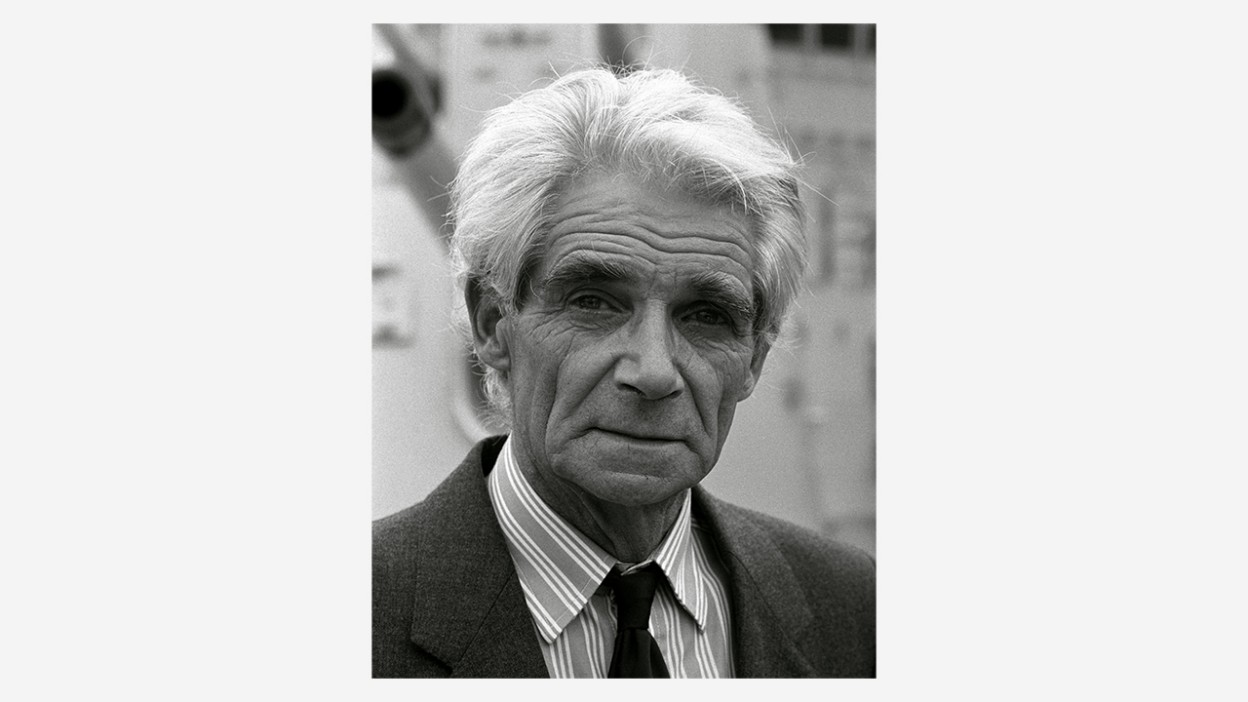
Charles Wheeler, 1989
Following a boating accident in which two of his friends die and he is
blinded, Patrick Todd goes to a school for the blind. His anger and frustration
are fueled by the other blind students who are adjusting or not,
one way or another. When Patrick meets the blind Geri, he begins to have hope
for a future. There are some raucous bar scenes, plenty of sex, and some of the
best dialogue in print. The author's rat-a-tat style is a plus. by Robert H.
Donahugh
The story unfolds at the fictional California Institute for the Blind, in a
San Francisco Bay Area town not unlike Wheeler’s blue-collar boyhood hometown,
El Cerrito, Calif. The snakewalk is a serpentine path where new “blinks,” or
blind-school students, gather to drink and talk. As the most direct route from
the school to a busy street, Wheeler adds, the snakewalk also is the
metaphorical link between the worlds of those who cannot see and those who can.
Wheeler’s protagonist adjusts slowly to the school, where he comes to learn to
read Braille, translate such routine tasks as banking into other senses and
develop the ability to navigate without eyes. by Mark A. Stein
ϟ
Snakewalk
excerpt (pp 10 to 39)
Charles Wheeler
Harmony Books / New York
Copyright © 1989 by Charles Wheeler
21.Abr.2026
Publicado por
MJA
|
